

Esports has moved far beyond its roots in competitive gaming, evolving into a significant global entertainment and economic powerhouse.
Its recent rise is hard to miss: more professional leagues, dedicated arenas, and a cultural sway that resonates most with younger audiences.
The scene itself is complex, with fast growth, constant tech shifts, and a revolving door of new games, platforms, and business models.
All figures in this article here are drawn from trusted primary sources: market research leaders, specialist data platforms, and financial analysts focused on gaming and esports.
Table of Contents
Global Market Size and Growth Forecasts
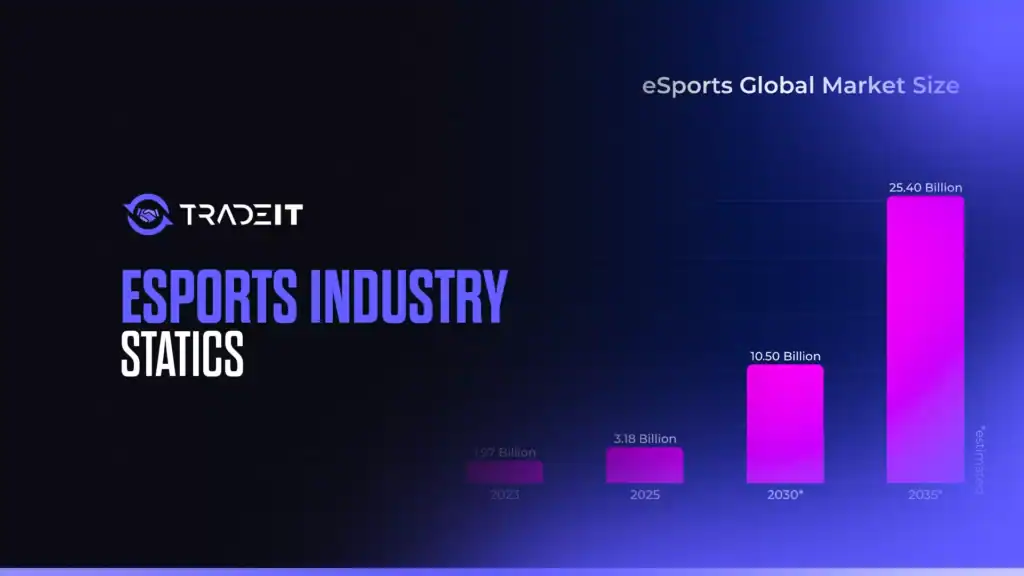
The esports industry’s value is already substantial. Though estimates vary, most agree it’s growing substantially each year.
Tracking these numbers matters, since they show just how significant and fast-moving the sector has become.
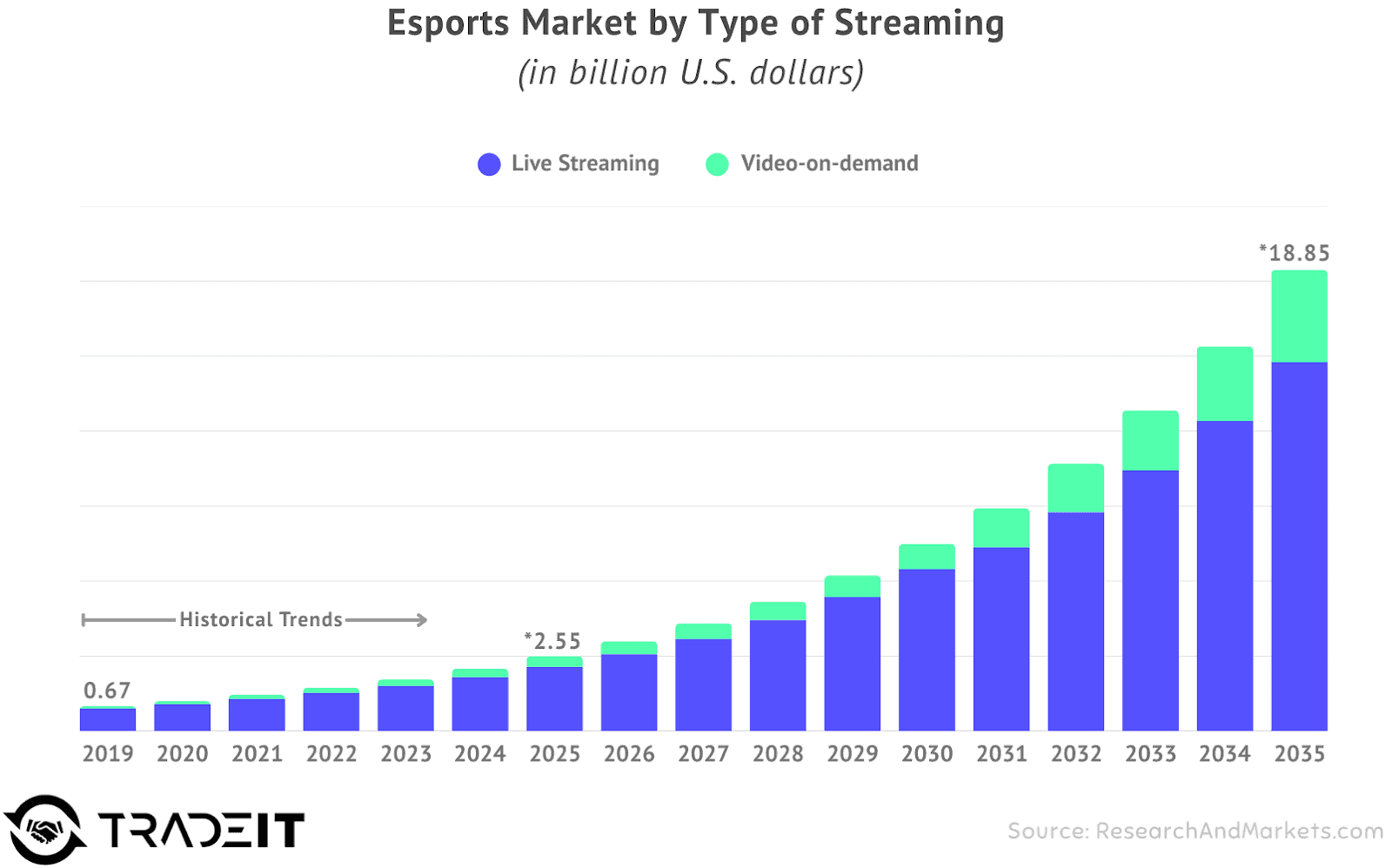
Recent market size estimates include:
The global esports industry is worth roughly $2.1–$2.3 billion around 2024–2025 as competitive gaming continues expanding through sponsorships, streaming platforms, and global tournaments.
In 2023, the global esports market was valued at roughly $1.96–$1.97 billion, marking a key milestone in the industry’s transition from niche entertainment to mainstream digital sports.
Industry forecasts suggest the esports market could reach around $5.17 billion by 2029, representing a strong ~17.5% compound annual growth rate from the 2023 baseline.
Long-term projections suggest esports could grow far beyond current levels as viewership, sponsorship investment, and global leagues expand, potentially pushing the industry well into the multi-billion-dollar range over the next decade.
The consistent projection of strong double-digit CAGRs across multiple reports signals universal agreement among analysts about the industry’s significant future expansion.
Audience Size, Demographics, and Viewership
Audiences are truly the engine of esports. They generate revenue, pull in sponsors, and ultimately prove just how culturally relevant the industry has become.
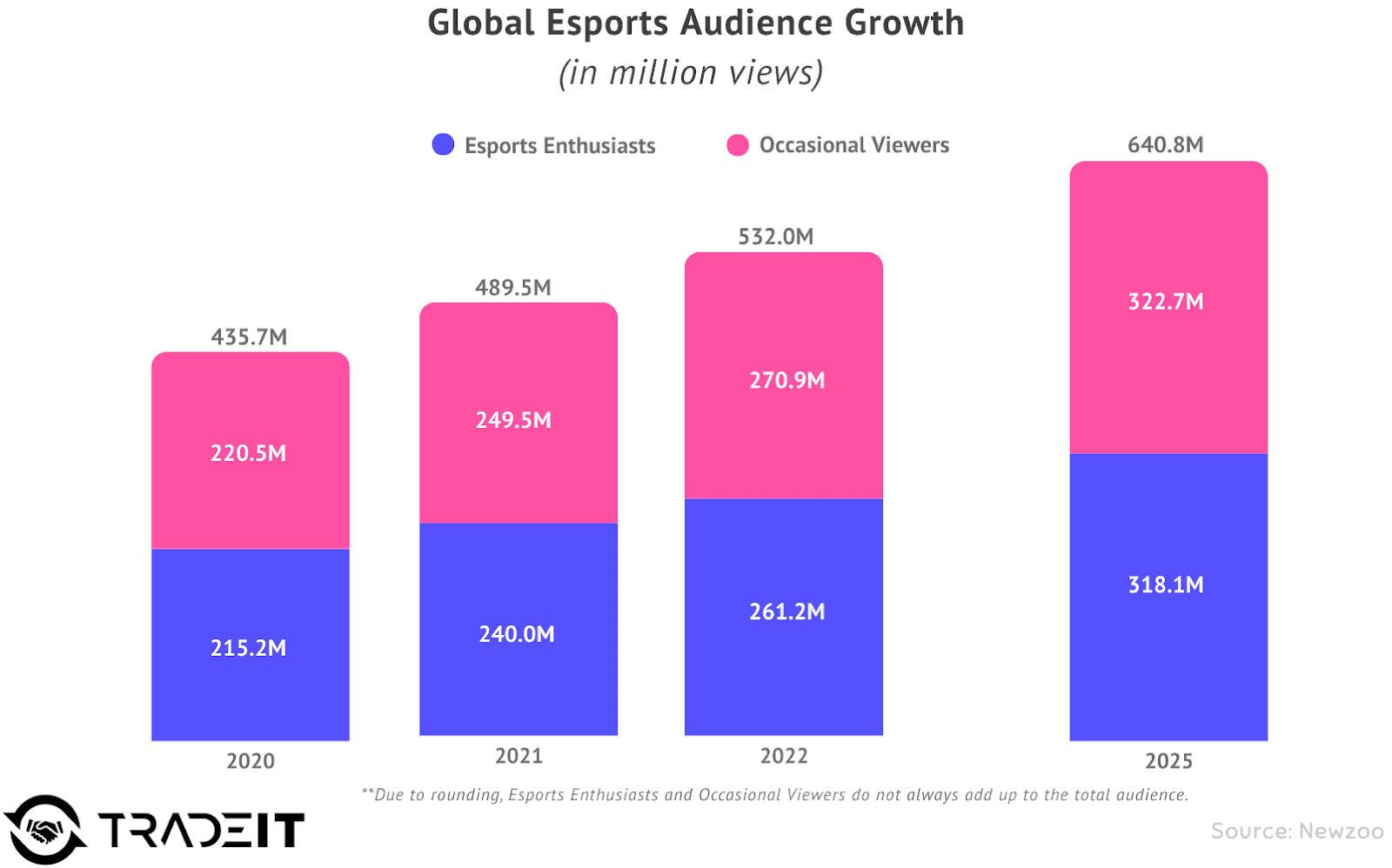
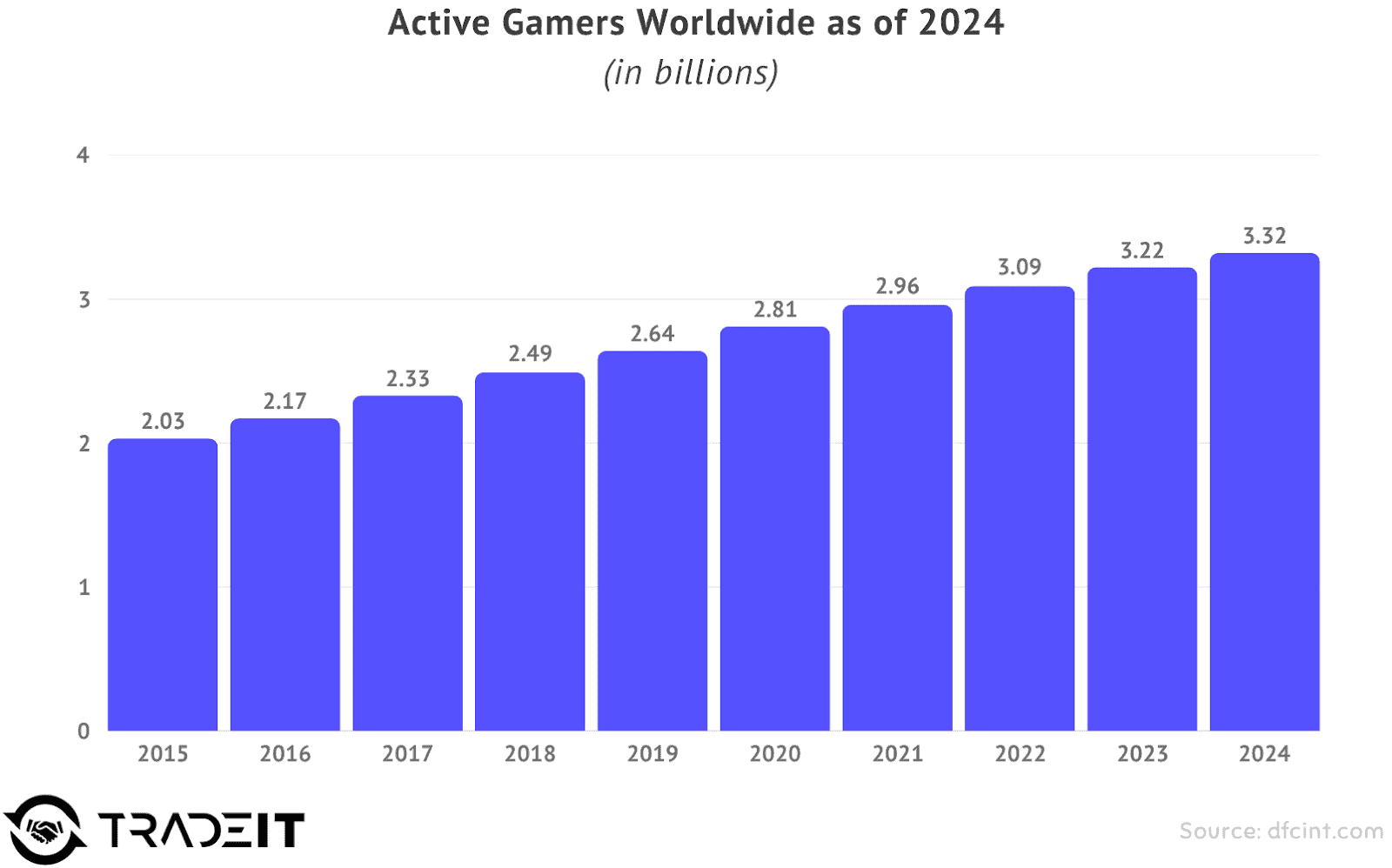
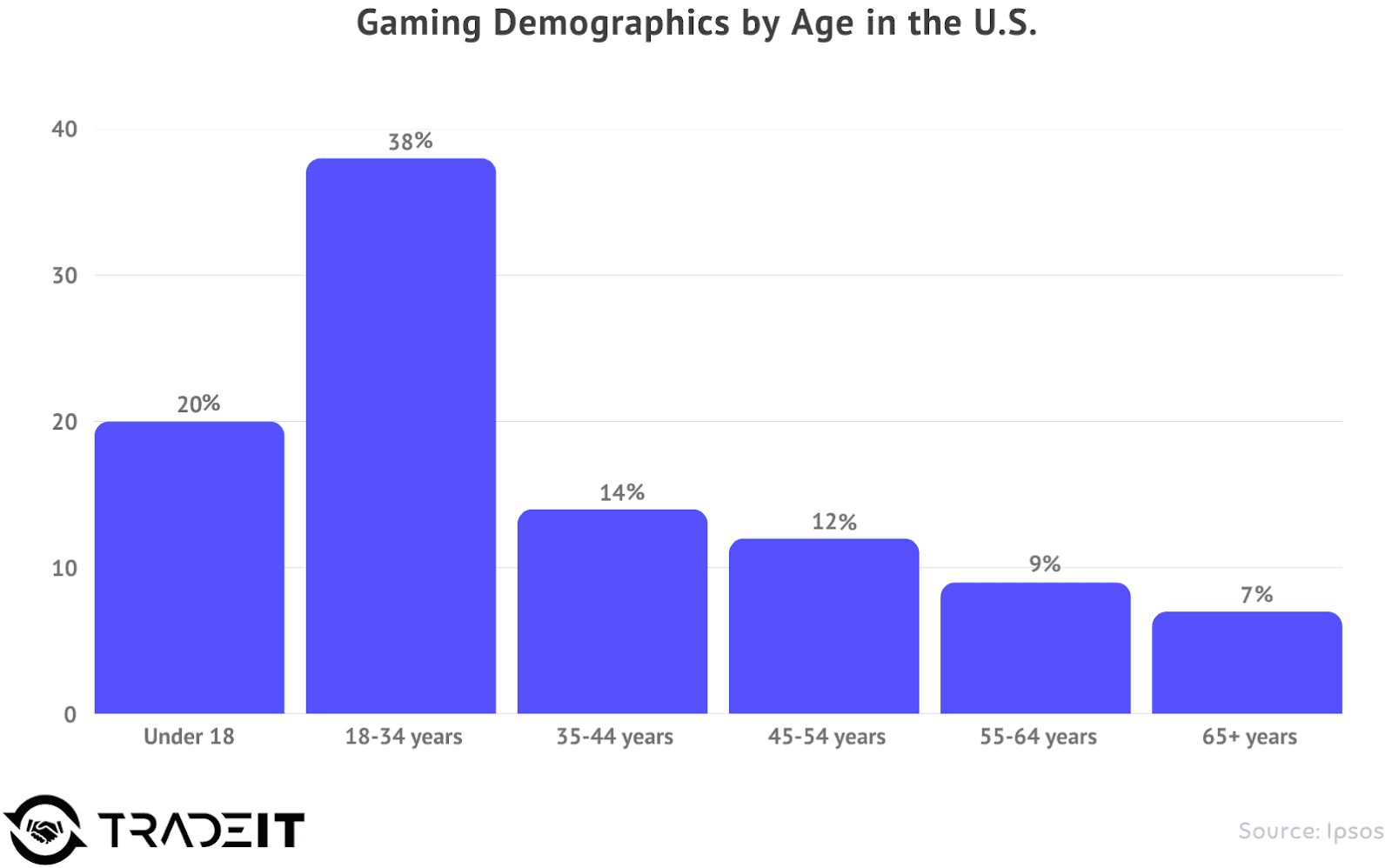
Here, you’ll find a breakdown of global esports viewership, demographic snapshots (relying on recent gamer data from 2023 and up), and a look at the eye-popping audience numbers major tournaments have drawn.
Global Audience Size
Audience Demographics
Major Tournament Viewership
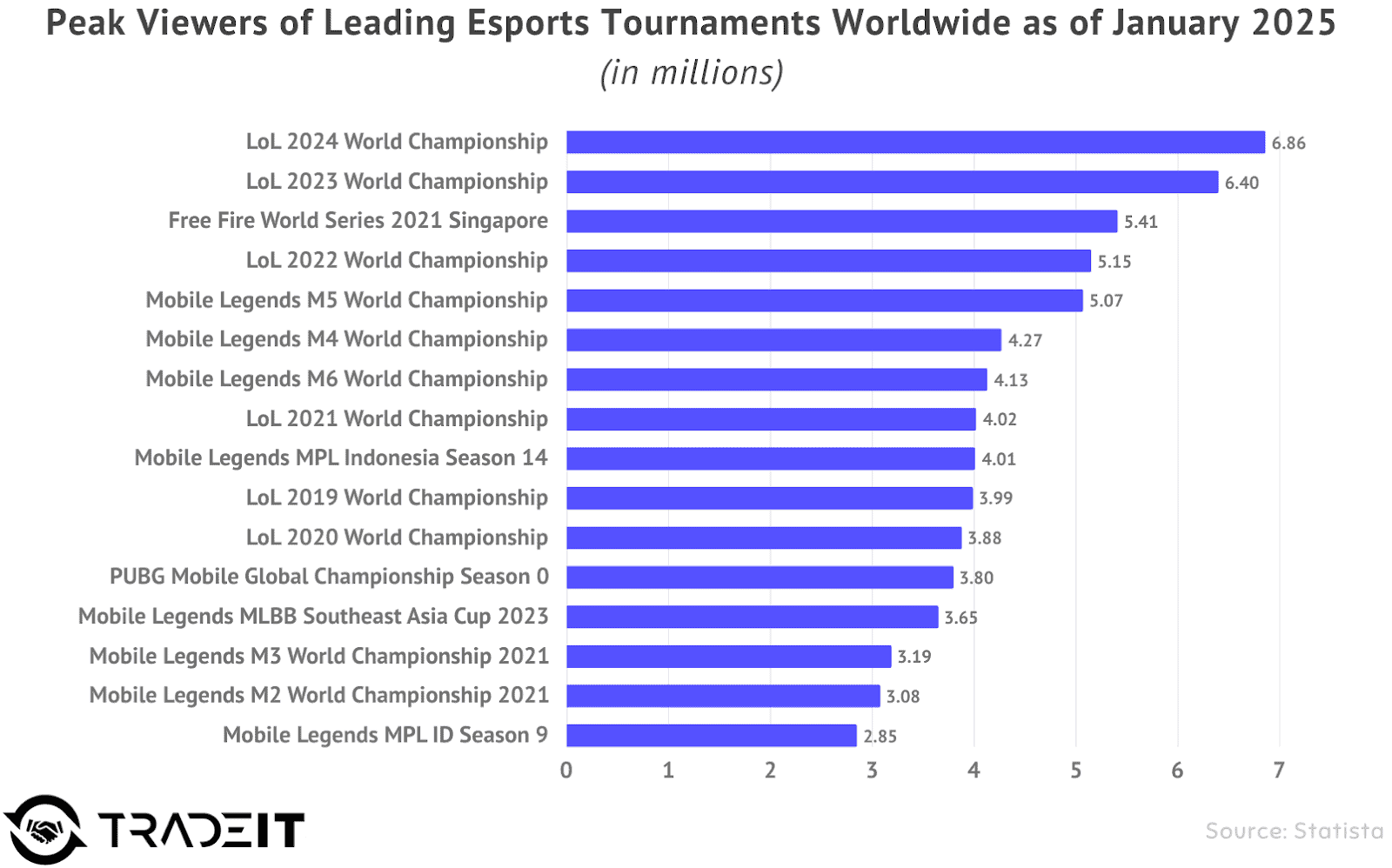
The League of Legends World Championship 2024 reached roughly 6.9 million peak concurrent viewers, remaining the most watched esports event globally.
1.7M average viewers watched the tournament across about 110 hours of broadcast, generating nearly 191 million hours watched.
The 2023 Worlds championship previously reached about 6.4 million peak viewers, highlighting the steady growth of League of Legends esports.
The Mobile Legends: Bang Bang M6 World Championship (2024) surpassed 4 million peak viewers, confirming MLBB as one of the biggest mobile esports globally.
The EWC × MLBB Mid-Season Cup 2024 drew more than 3 million peak viewers, showcasing the rapid growth of Southeast Asian esports audiences.
The first Counter-Strike 2 Major peaked at roughly 1.85 million viewers, making it one of the biggest CS esports events ever.
The Copenhagen Major averaged about 552K viewers and generated roughly 58 million hours watched.
The International 2024, Dota 2’s world championship, reached about 1.43 million peak viewers.
TI 2024 averaged about 467K viewers and accumulated roughly 54 million hours watched.
The previous International 2023 peaked at about 1.44 million viewers with roughly 65 million hours watched.
Across all competitions, the Esports World Cup 2024 generated about 103 million hours watched and reached roughly 2.8 million peak viewers.
The CDL Stage 1 Major 2024 attracted more than 245,000 peak viewers, highlighting steady interest in franchise-based esports leagues.
Top Esports Events by Peak Viewership
| Event Name | Game | Peak Concurrent Viewers (PCU) | Average Viewers (AV) | Hours Watched (HW) |
|---|---|---|---|---|
| LoL World Championship 2024 | League of Legends | 6.94 Million | 1.73 Million | 191 Million |
| MLBB M6 World Championship 2024 | Mobile Legends: Bang Bang | 4.13 Million | ~709,000 | ~85 Million |
| EWC × MLBB Mid-Season Cup 2024 | Mobile Legends: Bang Bang | 3.05 Million | ~730,000 | ~64 Million |
| Esports World Cup 2024 (All Titles) | Multiple Games | 2.8 Million | ~345,000 | 103 Million |
| PGL Major Copenhagen 2024 | Counter-Strike 2 | 1.85 Million | 552,223 | 58.3 Million |
| IEM Katowice 2025 | Counter-Strike 2 | ~1.3 Million | ~450,000 | ~40 Million |
| VCT Masters Madrid 2025 | Valorant | ~1.1 Million | ~430,000 | ~35 Million |
| The International 2024 | Dota 2 | 1.43 Million | 467,000 | 54 Million |
Popular Games, Genres, and Platforms
The shape of esports is set by the games themselves. Just a handful of titles and genres continue to dominate, pulling in the biggest crowds, the largest prize pools, and the most devoted players.
Top Games and Genres, by Viewership and Cummulative Prize Money
~2.8 million peak viewers across major tournaments, making it the most-watched esports title early in 2025.
~1.9 million peak viewers across regional leagues and international competitions.
~1.3 million peak viewers during global VCT tournaments.
~1.3 million peak viewers during major CS2 tournaments such as IEM events and Majors.
~872K peak viewers, driven mainly by the Honor of Kings / AoV competitive ecosystem.
Over $350 million in total esports prize pools, largely driven by The International tournaments.
More than $185 million awarded across global Fortnite competitions.
Around $165 million distributed through decades of Major and third-party tournaments.
More than $110 million in total esports prize money from global and regional events.
Approximately $95 million awarded across major international tournaments.
Tournament Landscape and Prize Pools
Major esports tournaments represent the pinnacle of competition, and the financial rewards offered reflect the industry’s commercialization. This section examines the scale of these tournaments and recent trends in prize money.
Recent Prize Pool Landscape
The prize pool for TI 2023 reached approximately $3.38 million, significantly lower than earlier editions but still among the largest esports tournaments.
The 2024 edition of Dota 2’s world championship featured a prize pool of about $2.78 million.
Across more than 20 esports titles, the inaugural Esports World Cup 2024 distributed roughly $60 million in total prize money.
Organizers announced an even larger prize pool of over $70 million for the EWC 2025, making it one of the richest esports events ever.
The 2024 World Championship featured a total prize pool of approximately $2.225 million.
Riot Games plans to increase the Worlds 2025 prize pool to about $5 million, reflecting the continued growth of the LoL esports ecosystem.
Modern CS2 Majors typically feature prize pools ranging from $1–2 million, depending on the tournament organizer and sponsorship structure.
Note: The all-time largest prize pool list was removed as most entries were pre-2023.
The shift away from Dota 2‘s massive crowdfunded prize pools opens the door for other events, like the multi-game EWC, to feature the largest aggregate sums, albeit distributed differently.
Players, Teams, and Organizations
Here, the focus shifts to the people at the heart of esports. We look at how many are competing at a high level, who ranks among the top earners (using recent data whenever possible), and what the estimates say about player salaries.
Number of Players and Organizations
More than 2,000 professional players competed in the inaugural Esports World Cup 2024, making it one of the largest multi-title esports events ever held.
The Esports Charts database currently tracks around 1,370 professional esports organizations competing across multiple global titles.
More than 200 esports clubs from around the world participated in the Esports World Cup 2024, representing dozens of countries and competitive scenes.
Top Earners: Players and Teams (Prize Money – Lifetime as of 2024/2025)
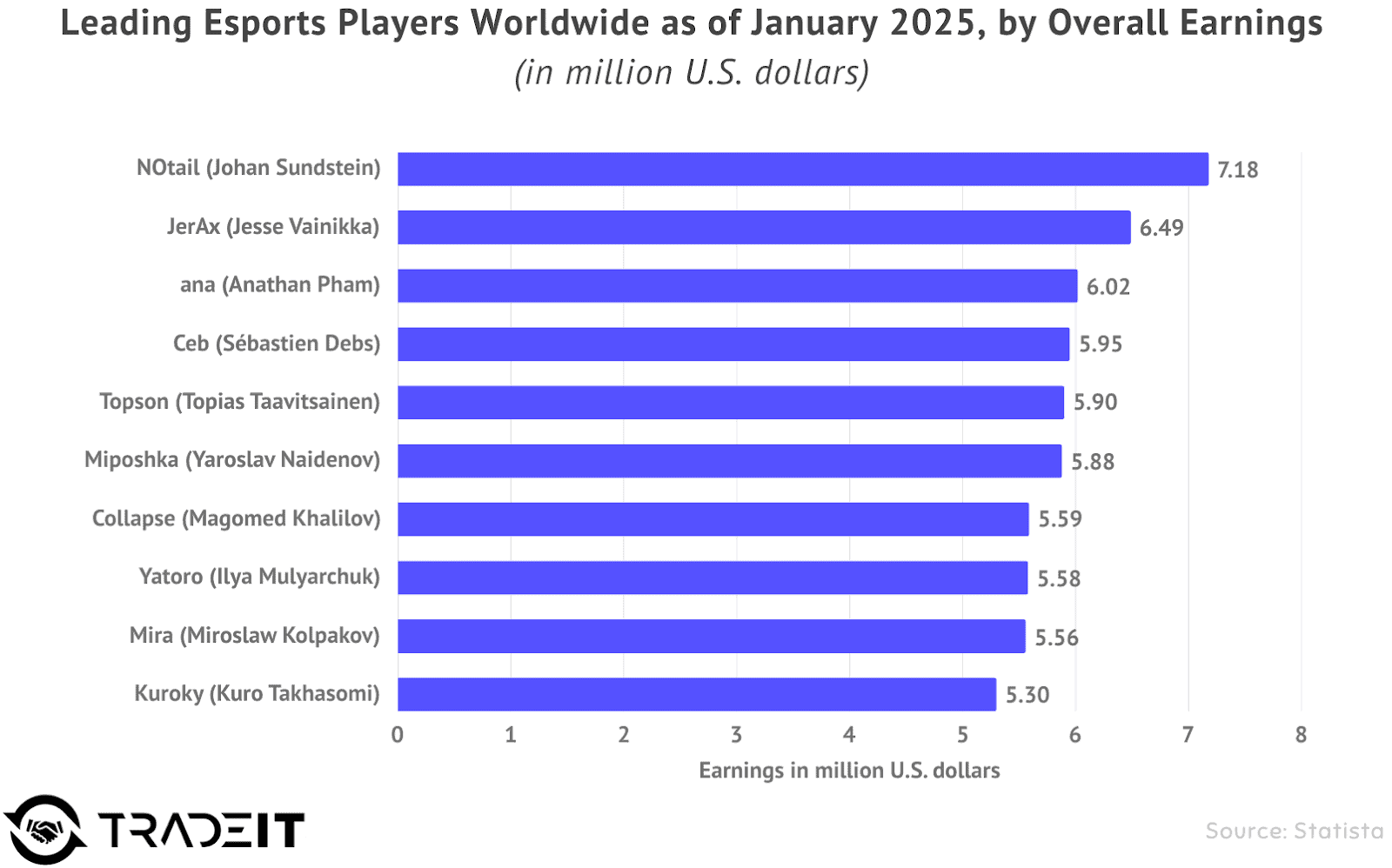
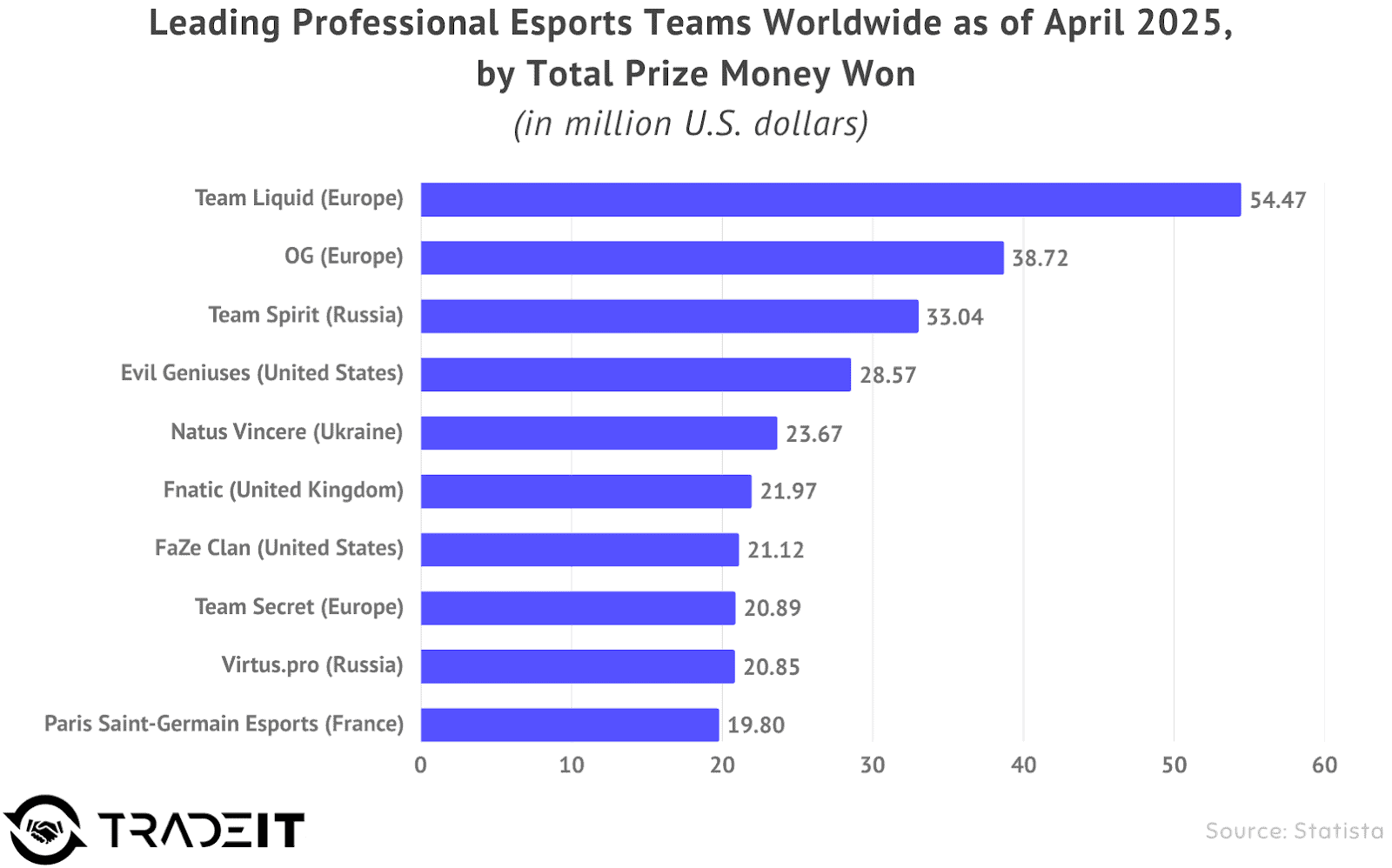
Note: Lifetime earnings reflect historical performance but are presented as current totals.
Player Salary Estimates (2024/2025 Data)
Estimated Annual Salary Ranges for Top-Tier Players (Select Games/Regions – 2024/2025 Data)
| Game | Region | Estimated Salary Range (Annualized USD/EUR) | Notes |
|---|---|---|---|
| League of Legends | LEC (Europe) | €90,000 – €400,000+ | Average ~€180k–€220k; rookies ~€90k–€120k; star players €300k–€400k+ |
| Valorant | NA (Tier 1 / VCT Americas) | $300,000 – $420,000 | Typically $25k–$35k/month for franchised teams; superstar players can exceed this with bonuses |
| Valorant | EU (Tier 1 / VCT EMEA) | $120,000 – $240,000 | Common salaries range from $10k–$20k/month depending on organization and experience |
| Counter-Strike 2 | Global (Tier 1) | $240,000 – $600,000+ | Top teams often pay $20k–$50k/month; superstar players and captains can exceed $50k/month |
| Dota 2 | Global (Tier 1) | $120,000 – $360,000 | Many teams combine moderate salaries with large prize pool bonuses |
Streaming Platforms and Content
Live streaming platforms are the primary venues for consuming esports content.
Platform Market Share
61.1% of global livestreaming hours watched were on Twitch, maintaining its position as the largest gaming streaming platform.
However, Twitch experienced a 6.3% year-over-year decline in hours watched in Q4 2024, reflecting stronger competition from other platforms.
YouTube Gaming held roughly 22.9% of the livestreaming market.
The platform recorded an 80% year-over-year increase in hours watched in Q4 2024.
It also saw 207% growth in hours streamed and 205% growth in unique streaming channels, signaling rapid expansion.
Kick captured approximately 5.7% of the global livestreaming market.
The platform experienced a 121% year-over-year increase in hours watched between Q4 2023 and Q4 2024.
Regional streaming platforms such as SOOP Korea and Chzzk together accounted for about 5.4% of global livestreaming market share.
Across all platforms, total livestreaming consumption reached approximately 32.5 billion hours watched in 2024, representing a 12% increase year over year.
Regional Market Snapshots
Esports growth isn’t uniform worldwide. This section offers regional snapshots—mostly using data from 2023 onward) to highlight those differences. Some gaps are bigger than you might think.
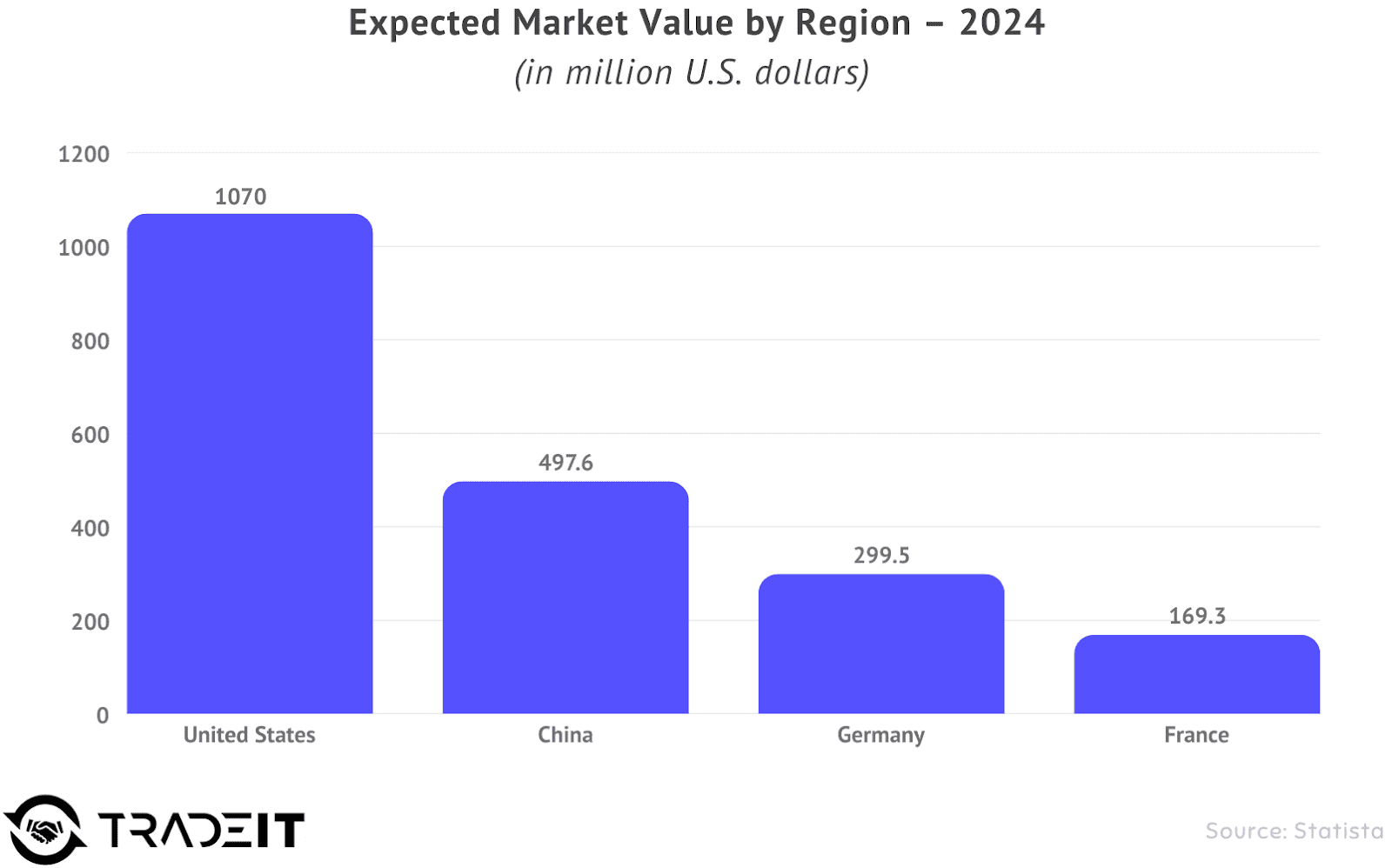
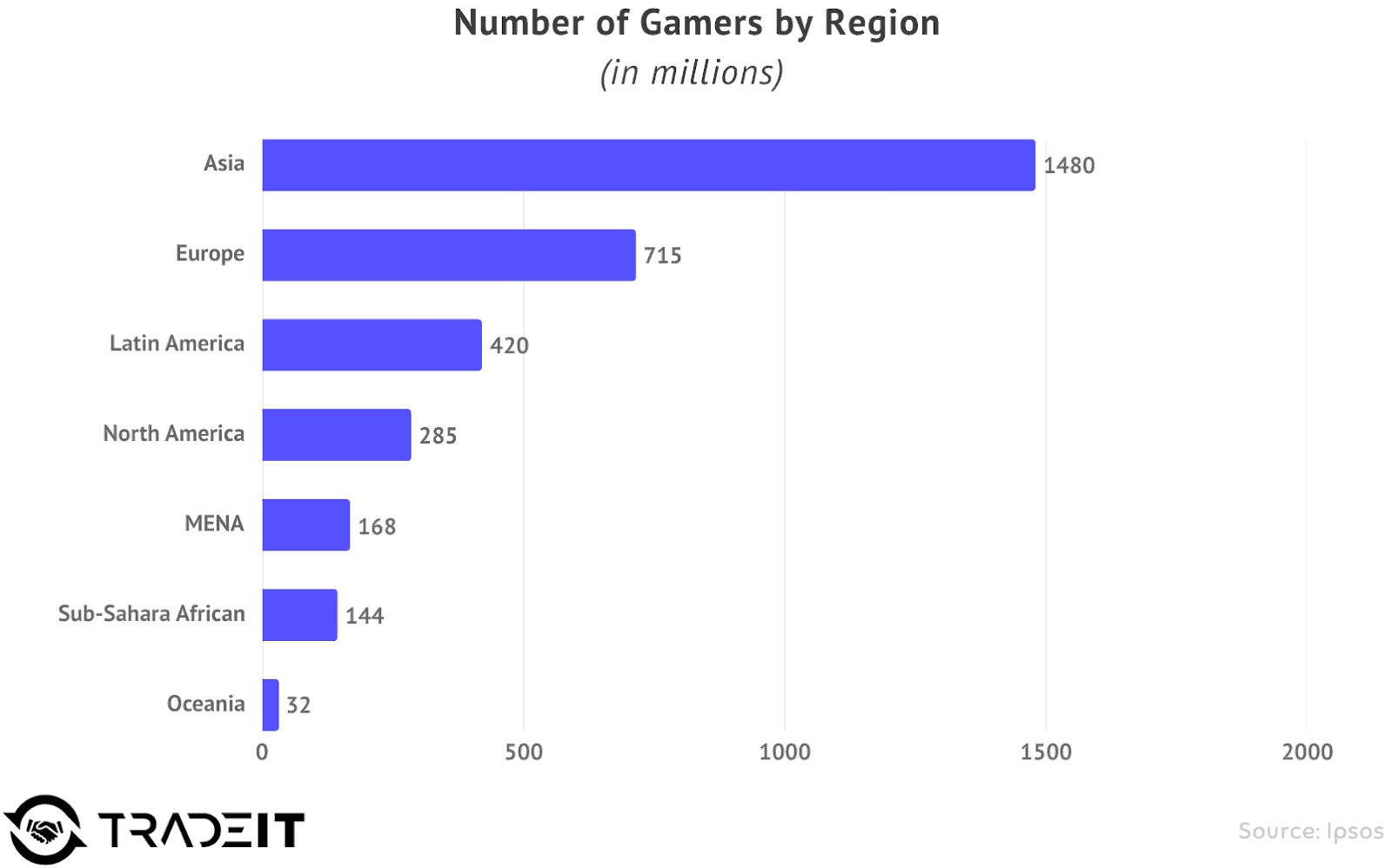
Over 44% of global esports market share was held by NA in 2024.
The US market reached an estimated $1.07B in 2024, with projections of $1.595B by 2029.
Canada contributed around $138.9M in 2024.
APAC is home to roughly 1.48B gamers, accounting for about 80% of global esports fans.
China’s market value is estimated at $498M, with 722.5M gamers in 2024.
South Korea’s projected gaming revenue reached $297.2M in 2024.
The SEA gaming market totaled around $5.89B in 2024.
Mobile gaming drives 69–72% of total revenue in the region.
Key national market sizes include $299.5M for Germany and $169.3M for France.
The overall European gaming market is estimated at $33.6B.
Table: Regional Esports Market Comparison (Estimates & Characteristics)
| Region | Est. 2025 Market Size (USD) | Dominant Platform(s) | Key Characteristics / Top Games |
|---|---|---|---|
| North America | ~$1.1 – $1.2B (US+CAN) | PC & Console | High revenue per player, strong pro scene, LoL, Valorant, CS2, CoD |
| Europe | ~$500 – $550M (National Markets) | PC & Console | Well-established PC esports, CS2, LoL (LEC), Valorant, regional mobile growth |
| APAC Overall | >$650M | Mobile & PC | Largest esports fan base (~1.48B gamers), strong mobile engagement, LoL, MLBB, AoV, Dota 2 |
| China | ~$498M | PC & Mobile | Massive player base (~722.5M), LoL, Dota 2, Honor of Kings, cross-platform dominance |
| Southeast Asia (SEA) | ~$5.89B (Gaming market) | Mobile | Fastest-growing region, Mobile Legends, AoV, Free Fire, Valorant, 69–72% revenue from mobile |
FAQs
1. What is the current global esports market size in 2026?
The global esports market is estimated at approximately $3–3.2 billion, driven by growth in mobile esports, live streaming, sponsorships, and franchise-based leagues.
2. Which region has the largest esports audience in 2026?
APAC remains the largest region, with over 1.5 billion gamers and roughly 80% of global esports fans, driven by countries like China, South Korea, and Southeast Asia.
3. What are the top esports games by viewership in 2026?
The most-watched esports titles include League of Legends, Mobile Legends: Bang Bang, Valorant, Counter-Strike 2, and Dota 2, with peak concurrent viewers ranging from 1–3 million for major events.
4. How much prize money is awarded in major esports events in 2026?
Top tournaments like The International (Dota 2) and LoL Worlds offer prize pools of $5–6 million, while multi-title events like the Esports World Cup have total pools exceeding $70 million.
5. Which streaming platforms dominate esports viewership in 2026?
Twitch leads with roughly 55–57% market share, YouTube Gaming continues rapid growth (~25%), and emerging platforms like Kick hold 5–6%, reflecting a more fragmented streaming landscape.