
When it comes to Rust, the Recycler is one of the most valuable tools you can use, especially if you’re trying to make the most out of every loot run.
The Recycler breaks down items you might not need right now into essential resources. With a good understanding of the Rust Recycle Chart, you’ll know exactly what to prioritize and what to leave behind, making your resource gathering way more efficient.
Table of Contents
How Recycling Works in Rust
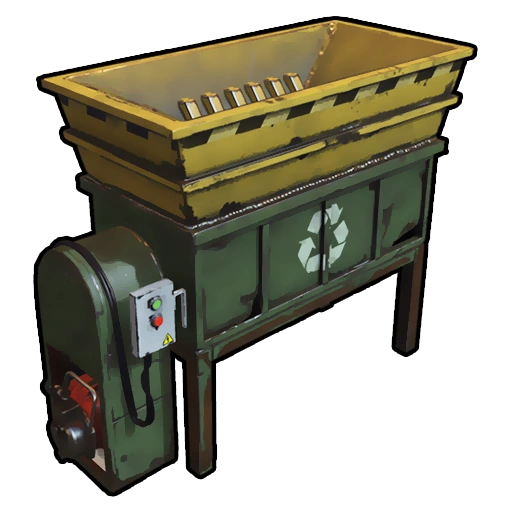
In simple terms, the Recycler is a non-craftable machine you’ll find at various monuments around the map. It’s essential for breaking down unwanted items into their base resource. Think scrap, metal fragments, high-quality metal, and cloth.
By recycling efficiently, you maximize your loot without needing to constantly search for new resources, which is a huge advantage, especially when you’re just starting out or if you’re focused on crafting advanced items.
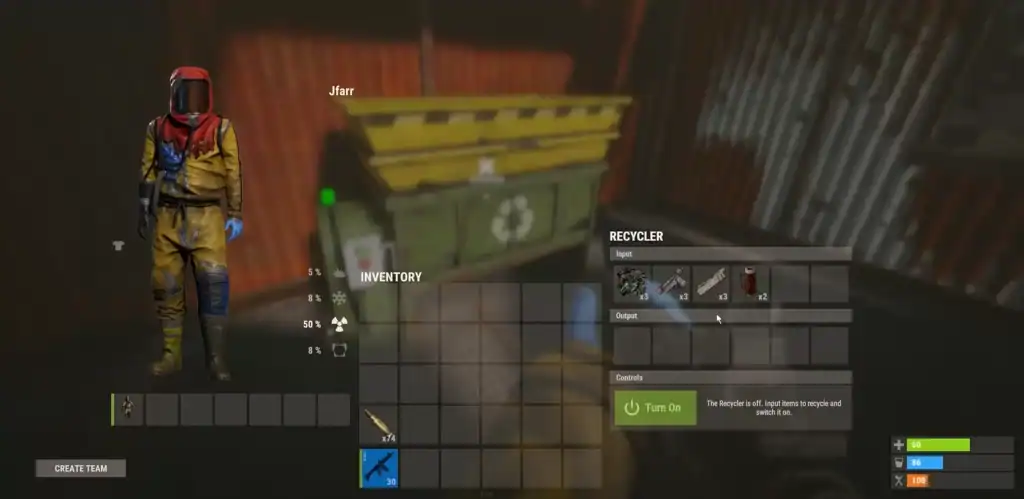
To recycle an item, simply place it into the Recycler’s inventory and start the process. Each item takes a short amount of time to break down, and once completed, the resulting materials are automatically transferred to your inventory.
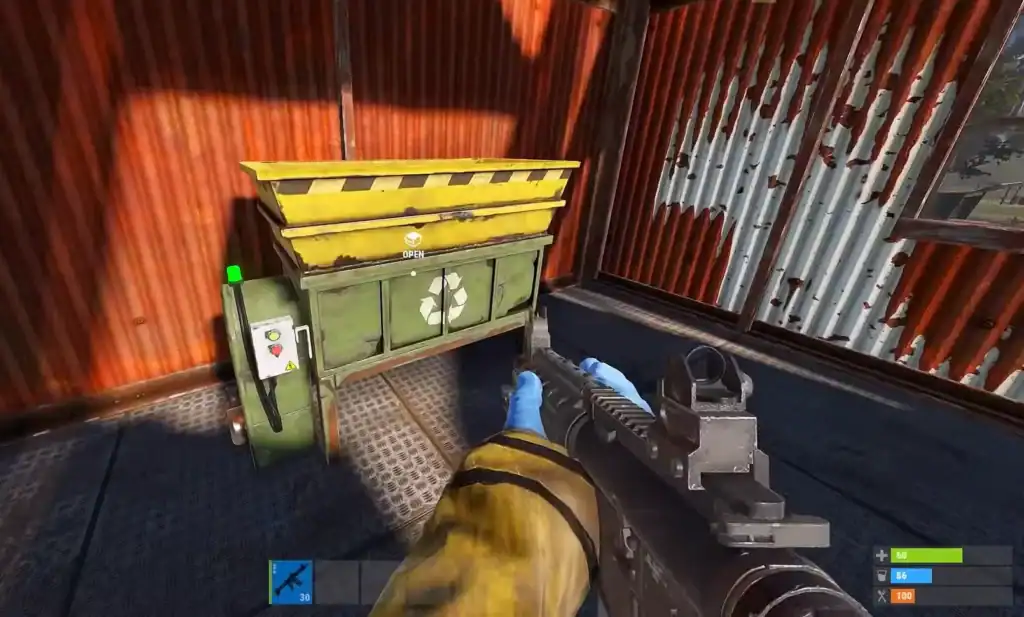
Because recycling generates noise and leaves players exposed while using the machine, it can be risky in PvP areas. For this reason, many players choose safe zones or secure locations before recycling valuable loot.
Why Recycling Is a Game-Changer in Rust
When I started playing, I quickly learned that not everything I picked up was worth carrying around. With limited inventory space, I needed a way to get the most out of each item without clogging my inventory.
Recycling became my go-to strategy. Instead of hoarding, I broke items down to get more essential resources, making sure nothing went to waste.
This approach saved me time and gave me the freedom to roam, fight, or loot more freely, knowing that anything “extra” could be recycled into something useful.
The Rust Recycle Chart
Here’s a rundown of some common items I usually recycle and the resources they yield:
| Item | Scrap | Metal Fragments | High-Quality Metal | Cloth | Other Materials |
|---|---|---|---|---|---|
| Metal Pipe | 5 | 10 | 0 | 0 | — |
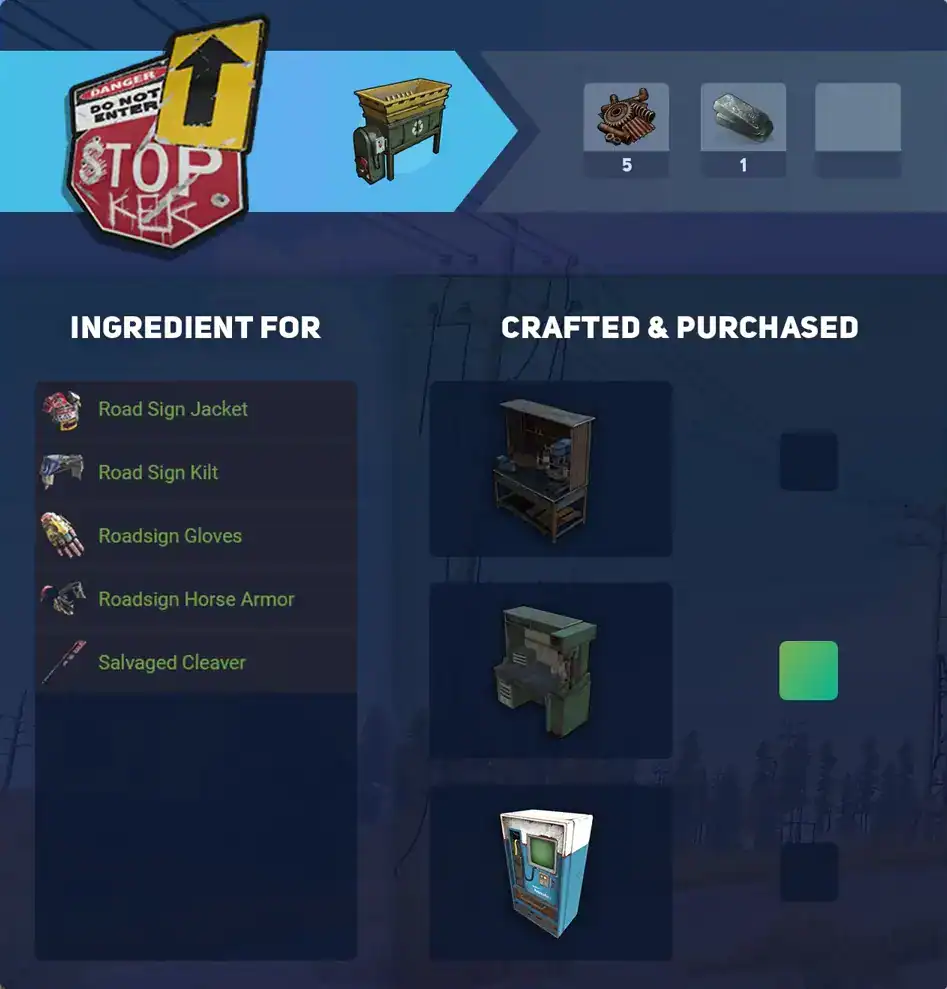
| Road Signs | 5 | 10 | 0 | 0 | — |
| Sheet Metal | 8 | 10 | 0 | 0 | — |
| Metal Spring | 10 | 0 | 0 | 0 | — |
| Sewing Kit | 2 | 0 | 0 | 10 | — |
| Rope | 0 | 0 | 0 | 15 | — |
| Tarp | 0 | 0 | 0 | 50 | — |
| Electric Fuse | 2 | 0 | 0 | 0 | — |
| Tech Trash | 20 | 0 | 10 | 0 | — |
| Rifle Body | 25 | 0 | 20 | 0 | — |
| SMG Body | 15 | 0 | 20 | 0 | — |
| Semi-Automatic Body | 15 | 75 | 20 | 0 | — |
| CCTV Camera | 0 | 0 | 2 | 0 | 2 Tech Trash |
| Targeting Computer | 5 | 0 | 10 | 0 | 3 Tech Trash |
How to Make the Most of Recycling in Rust
Focus on high-return items like Rifle Bodies and Tech Trash. These provide valuable scrap and high-quality metal, making them the most efficient recycling targets.
Convert bulky items like Tarps into cloth and rope to free up space. This keeps your inventory clean and improves looting efficiency.
Recyclers can be dangerous in PvP zones. Choose low-traffic areas or secure spots where you can safely process loot without being ambushed.
Extra items like Sewing Kits and Springs can be recycled into useful materials, helping prevent inventory clutter and supporting future crafting.
Best Items to Recycle Early Wipe in Rust
Early wipe is all about converting quick loot into scrap for research and progression. Focus on items that give solid returns without needing rare components:
Consistent early scrap and metal fragments for fast progression.
Balanced output of scrap and crafting materials.
Turns bulky loot into stackable cloth for early-game utility.
Efficient cloth source when inventory space is limited.
These items are common, easy to find, and provide steady progression without risking high-value gear.
What You Should Not Recycle in Rust
Some items are far more valuable when kept intact rather than broken down:
Often more valuable in PvP or trading than as raw materials.
Items like gears and computers are critical for progression.
Essential for late-game raids and base progression.
Sometimes better used or sold than broken down.
In general, if an item is hard to replace or directly impacts progression, it’s usually better to keep it.
Best Recycler Locations and Safety Tips in Rust
Choosing the right recycling spot is just as important as what you recycle:
Safest option with no PvP risk—ideal for valuable loot.
Safe but often crowded with other players.
Convenient but high-risk PvP zones.
Best long-term safety if your base is secure.
Safety Tips
Always scan for players before starting recycling.
Recycling is loud and can attract nearby players.
Finish quickly and avoid staying exposed too long.
Recycle high-value loot in smaller, safer trips.
Efficient recycling is not just about resources. It’s about staying alive while doing it.
Conclusion
The Recycler in Rust is honestly one of the most underrated tools. Once I started using it efficiently, I noticed a huge improvement in my ability to gather and manage resources.
By understanding what each item yields and how to use recycling as part of my routine, I save a ton of time and am always prepared for crafting or trading.
FAQs
What is the Rust recycle chart?
The Rust recycle chart shows what materials you get back when you recycle items in Rust. It helps players understand the return value of weapons, components, and gear.
Why is the recycle chart important?
It helps players efficiently manage resources by identifying which items are worth recycling for scrap, metal fragments, or high-quality metal instead of hoarding unnecessary loot.
Do all items give the same recycle output?
No. Each item has a different recycling result depending on its rarity, crafting cost, and material composition. High-tier items usually give more valuable resources.
Can recycling be done anywhere in Rust?
No. You must use a Recycler machine, which is found in monuments, outposts, and certain player-built bases with deployed recyclers.
Is recycling always the best option for items?
Not always. Some items are more valuable when used for crafting or trading rather than breaking them down, especially rare weapons or components.