
CS2 is a simple game at first glance, but it quickly becomes apparent that mastering your roles and positions can significantly influence a team’s performance. CS2 roles and positions are a rabbit hole. The deeper you go, the more roles will pop up.
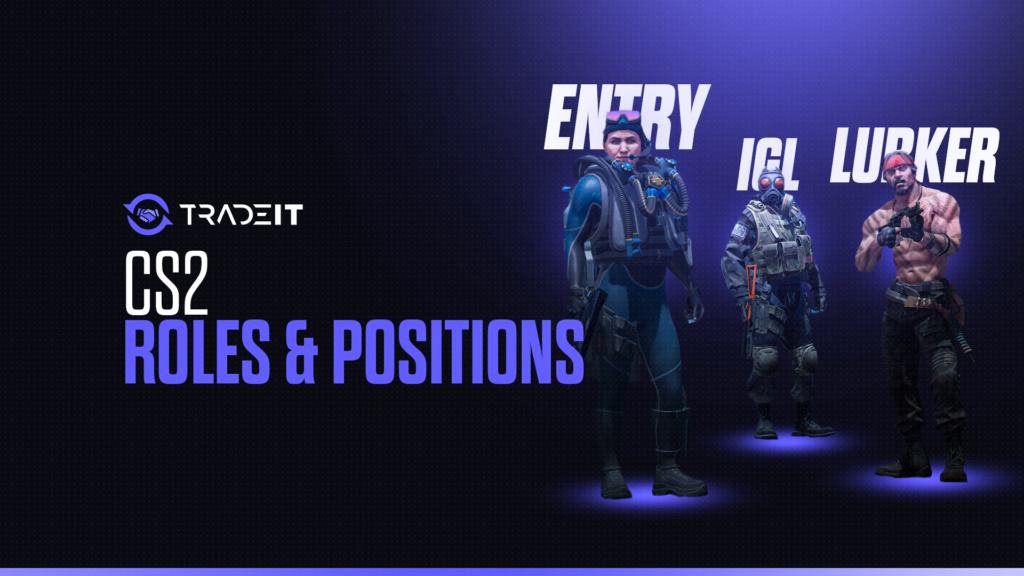
This article will explore the core roles: entry fragger, support, IGL, lurker, and AWPer. Each of them is critical in clinching victory.
Table of Contents
The Essence of CS2 Roles and Positions
Success in the adrenaline-fueled arenas of Counter-Strike hinges on much more than individual skill. It’s a blend of strategy, coordination, and role mastery.
The most recognized roles in CS2 are:
The primary player to push aggressively and open rounds with kills.
Provides utility, assists teammates, and helps secure map control.
Calls strategies, coordinates team movements, and controls the pace of the game.
Operates independently to catch rotations and create surprise opportunities.
Specializes in sniper rifles, holding long angles and picking off key targets.
Each role, with its unique responsibilities and functions, contributes to a balanced and dynamic CS2 team ready to outmaneuver the enemy at every turn.
1. In-Game Leader (IGL)
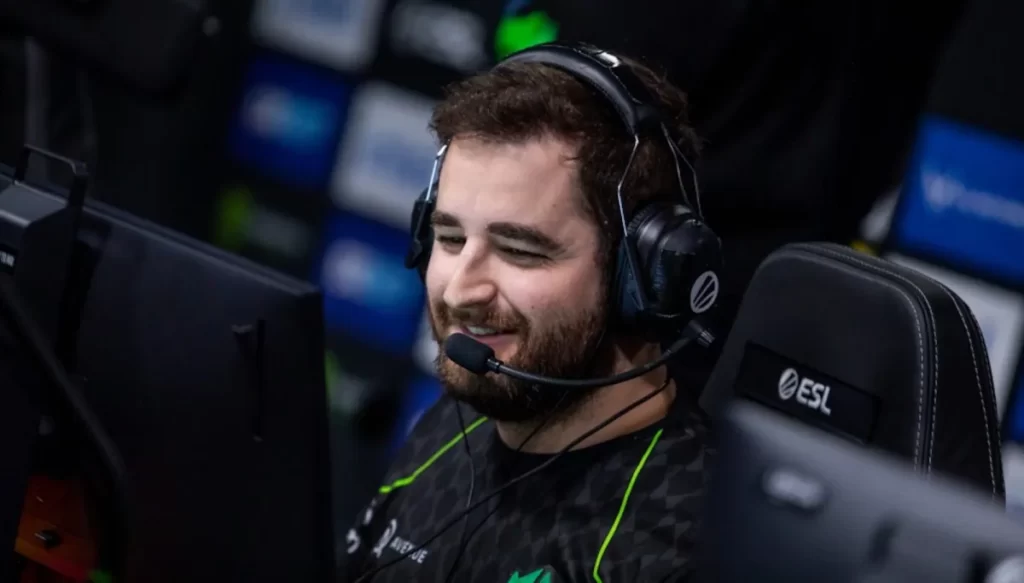
At the heart of any CS2 team is the In-Game Leader, who performs the following tasks:
Steers the ship with a keen eye on the enemy’s every move.
Possesses a deep reservoir of map knowledge to control rotations.
Formulates intricate game plans and adapts them on the fly as needed.
Reads the enemy team and predicts their strategies.
Rallies teammates to execute the game plan with precision.
The IGL’s acumen is of utmost importance for the success of the team, especially when leading professional players.
But what truly sets the best IGLs apart? It’s their uncanny ability to make split-second decisions that can flip a round on its head. Guiding teammates through the fog of war, the IGL ensures that every move is a calculated step towards victory.
Whether it’s calling for a bold rush or a tactical retreat, the IGL’s word is the team’s gospel, and their leadership is the linchpin of success.
2. Support Player
This role revolves around the following tasks:
Handles grenades, flashes, and smokes to support teammates and control space.
Supports entry fraggers and lurkers by providing cover and backup during engagements.
Constantly communicates enemy positions, rotations, and map control information.
Helps maintain map control and prevents enemy advances into critical zones.
Works closely with all teammates to execute strategies and adjust to dynamic rounds.
The role of a support player may not always take the spotlight, but its significance cannot be overstated. In the ebb and flow of a CS2 match, it’s the support players who empower their teammates, providing the scaffolding for the team’s strategy.
With an arsenal of smoke grenades and flashbangs at their disposal, they are the architects of opportunity, clearing paths and covering angles that enable the entry fraggers and AWPers to shine. Half of what they do is practicing smokes in CS2.
Support players often go unnoticed as they diligently fortify the team’s economy and gather vital intelligence.
Their versatility and situational awareness make them a force multiplier, amplifying the team’s overall capability to engage enemies and secure objectives.
The ability to assume the support role is an attribute most players should hone, as it’s integral to the team’s cohesive playstyle and overall success.
3. Entry Fragger
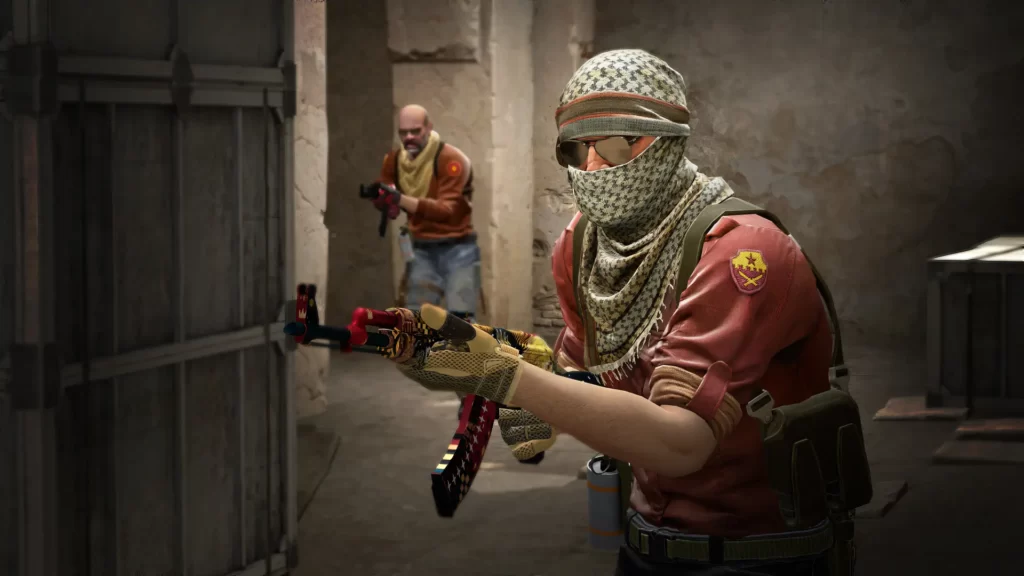
Leads the push into contested areas, seeking early kills to open rounds.
Engages enemies first to disrupt their setups and create openings for the team.
Focuses on accurate shots under pressure to secure early kills or force enemy retreats.
Creates chaos in enemy lines to allow teammates to capitalize on openings.
Adapts quickly to enemy positions and round dynamics to maintain pressure.
The entry fragger is the spearhead of the team’s assault, the first to breach enemy defenses with a calculated aggression that can make or break a round.
This role demands players who are not just confident and quick on the draw, but also ones who possess the sharp instincts to spot enemy positions and secure the pivotal first kill.
Charging into contested territories, the entry fragger sets the tempo, their every move scrutinized by the enemy and their own team.
As they engage the opponent head-on, it’s their duty to call out enemy positions and create openings for their teammates to exploit, often at the risk of being traded themselves.
It’s a role that carries immense pressure yet offers the thrill of being the catalyst for the team’s advance.
4. Lurker
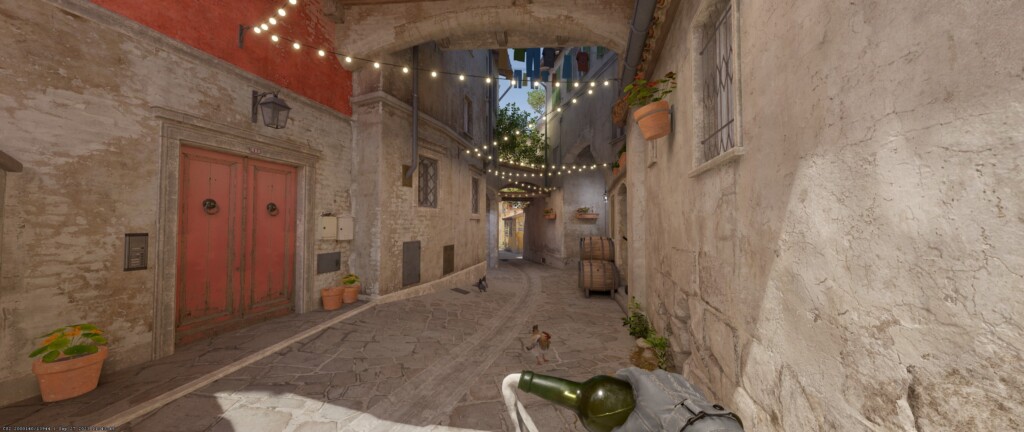
In the shadows of the CS2 battlefield, the lurker waits with bated breath, ready to strike like a silent assassin. This role is one of cunning and guile, perfect for those who relish the hunt and excel in the art of surprise.
With a deep understanding of enemy movements, lurkers gather information and create chaos within the enemy ranks, exploiting the slightest misstep to pounce on unsuspecting foes. A good lurker:
Moves with the patience of a predator, waiting for the perfect moment to strike.
Coordinates attacks to coincide perfectly with teammates’ movements.
The key player who can turn the tide of a skirmish with a single decisive move.
Sows doubt and confusion among enemy lines to create openings for the team.
Relies on remaining unseen and unheard until the perfect moment to strike.
5. AWPer
Holds long sightlines to prevent enemy advances and secure key positions.
Focuses on high-value enemy players, often the entry fragger or lurker, to create openings.
Waits for the perfect moment to strike, ensuring maximum impact with minimal risk.
Anchors bombsites or critical areas, denying enemy entry and maintaining control.
Adjusts positions according to enemy movements and team strategy to maintain pressure.
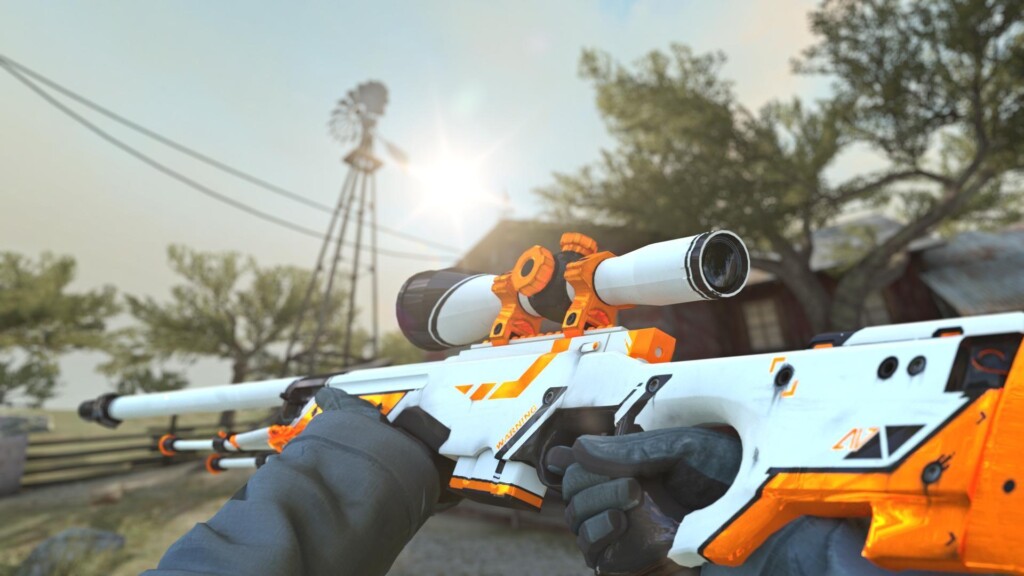
The AWPer is the eagle-eyed sharpshooter of the team, wielding the powerful sniper rifle to maintain map control and pick off key targets from a distance.
His role is one of utmost precision, and the best AWPers are known for their ability to control key areas of the map, dictating the flow of the game with each shot fired.
An effective AWPer is not just a one-trick pony. He often embodies a hybrid role, showcasing his versatility by switching to a rifle when the situation demands it.
This adaptability ensures that the team can rely on the AWPer to deliver crucial picks that can sway the round in their favor. Plus, they get to rock cool CS2 AWP skins!
Secondary Roles
If you want to go even deeper and master the game at the highest competitive level, you must delve into highly specific roles.
| Role | Main Tasks |
|---|---|
| Anchor | Holds key bombsites or positions when teammates rotate; prevents enemy pushes; provides crucial information about enemy movement. |
| Rotator | Quickly moves between bombsites to reinforce teammates; adapts to enemy strategy; communicates threats and timing to the team. |
| Site Holder | Maintains control of assigned bombsite; prevents enemy plant/defuse attempts; works with anchors and rotators to ensure strong site defense. |
Flexibility in CS2 Roles
Adaptability is the name of the game in CS2, where no two rounds are the same and the unexpected is just around the corner. The best teams understand that flexibility in roles can be the difference between a hard-fought victory and a narrow defeat.
Whether it’s switching from a primary to a secondary role or altering your playing style to match the game’s rhythm, being able to pivot is crucial for a team’s success.
Role vs. Map Position in CS2
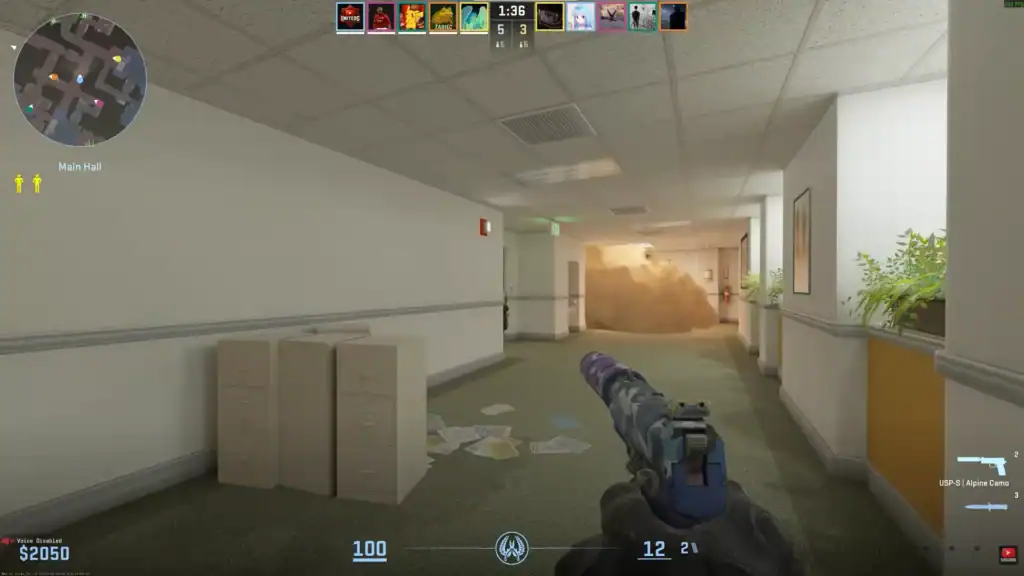
Understanding the difference between a role and a map position is essential if you want to play consistently and coordinate well with your team.
What Is a Role?
A role defines how you play and what responsibilities you have within the team across the entire match. Roles are playstyle-based and usually stay consistent regardless of the map or round.
What Is a Map Position?
A map position is the physical location you are responsible for on a specific map.
Examples:
A Ramp, Palace, Mid, B Apartments
Banana, A Site, Pit, Apps
Long, Short (Catwalk), B Tunnels
Positions are location-based and can change depending on:
Positions and setups depend on the specific map in rotation.
Roles and positioning shift depending on the planned execution or defense.
Early, mid, or late-round situations change positioning priorities.
Key Difference
Your job on the team
Where you play on the map
A player keeps their role, but their position can change every round. The role defines what you do, while the position defines where you do it.
How to Choose the Right Role in CS2
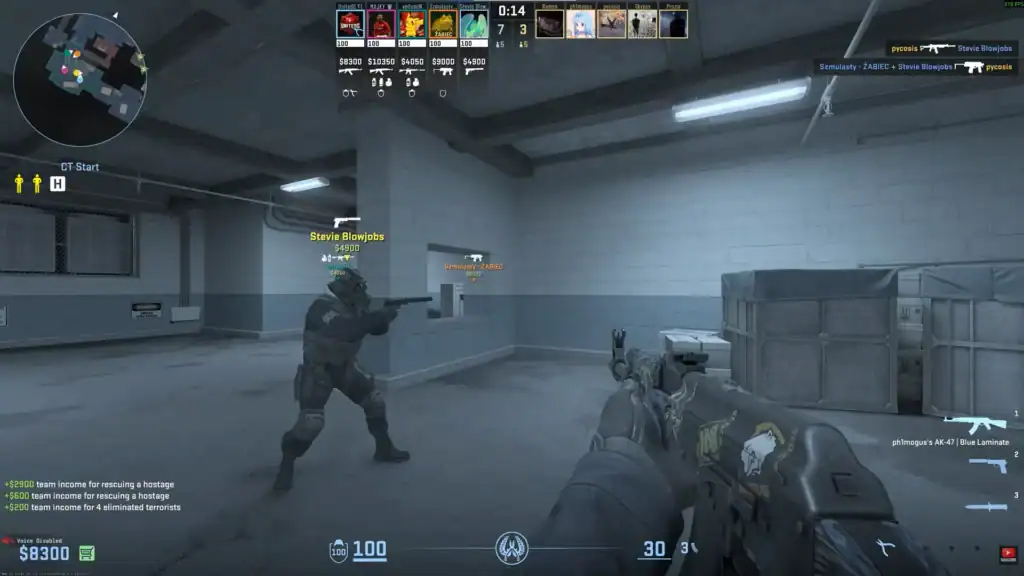
Choosing the right role isn’t about picking what sounds impressive. It’s about matching your skills, mindset, and behavior in-game.
If your aim, reaction time, and movement are strong, you’ll naturally fit roles like entry fragger or AWPer.
If your mechanics are still improving, support or anchor roles suit you better, where positioning and utility matter more than raw aim.
Players who communicate often and give clear info tend to excel in support or in-game leader roles.
If you prefer acting on information instead of talking constantly, roles like lurker or entry may suit you better.
Aggressive players fit entry roles, while patient, tactical players thrive in control-based roles.
The best role is the one where your strengths feel natural, repeatable, and consistently useful to your team.
Summary
As we’ve ventured through the roles and strategies that define CS2, it becomes clear that mastering these elements is integral to a team’s playbook.
From the decisive shots of the AWPer to the strategic calls of the IGL, each role plays a part in the grand scheme of victory. Embrace these roles, adapt to the ever-changing battlefield, and you’ll find your team not just playing the game, but dominating it.
FAQs
What is the difference between an entry fragger and a support player in CS2?
The entry fragger is responsible for leading pushes and getting the first kills, while the support player provides utility, covers teammates, and helps maintain map control.
What does an in-game leader (IGL) do?
The IGL calls strategies, coordinates the team’s movements, and adjusts tactics during rounds to counter the enemy’s plan.
How does a rotator differ from an anchor?
A rotator moves between bombsites to reinforce teammates and adapt to the enemy, while an anchor stays on a key site to hold position and provide consistent defense.
When should an AWPer rotate or stay in position?
An AWPer usually holds long sightlines to pick off key targets but can rotate to support teammates if the situation requires, balancing risk with maintaining control.
What are the responsibilities of a lurker in CS2?
The lurker operates independently, flanks enemies, gathers information, and creates surprise opportunities to turn the tide of a round.
Can one player flex between different roles?
Yes. Many players flex between roles depending on the team’s needs. For example, a player might act as an entry fragger on one map but switch to a support role on another. In higher-level play, flexibility is often valuable, but in structured teams players usually stick to one main role for consistency.
Is it better to specialize in one CS2 role or learn multiple?
For most players, especially those improving, it’s better to start by learning multiple roles. This helps you understand the game better. Over time, you can specialize in the role that fits your playstyle best, whether that’s aggressive entrying, supporting, or lurking.
Which CS2 role is best for beginners?
The support role is usually the best starting point. It teaches:
- Utility usage (smokes, flashes, molotovs)
- Positioning and timing
- Team coordination
This gives beginners a strong foundation before moving into more demanding roles like entry fragger or AWPer.