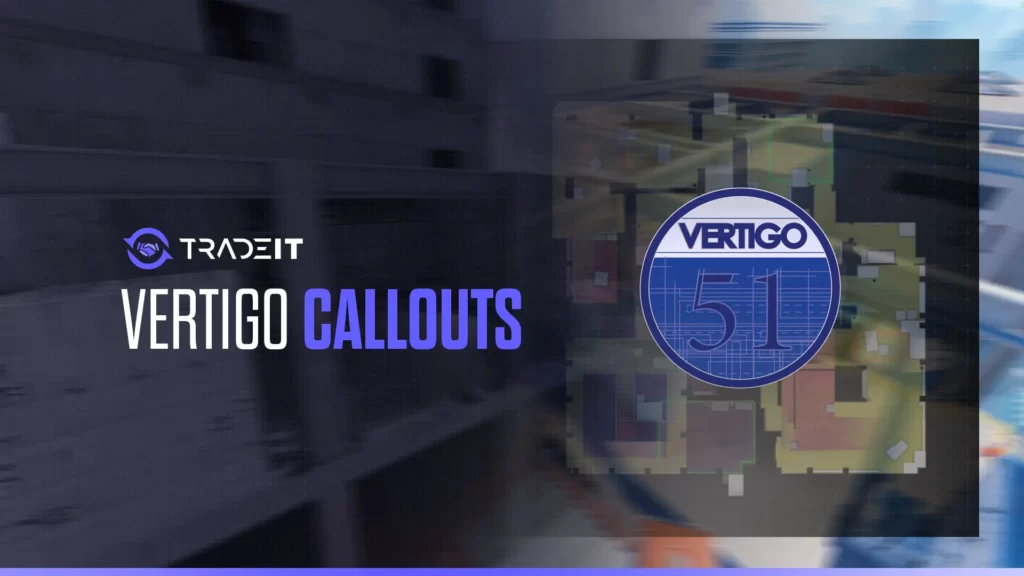


If you’re diving into Vertigo and want to level up your game, understanding the callouts is crucial. In 2025, Vertigo is not part of the Active Duty Map Pool but it is one of the reserve maps, which makes it important.
Let’s break down the key areas of the map, making it easier for you to communicate with your team and secure wins.
Table of Contents
A Site Callouts
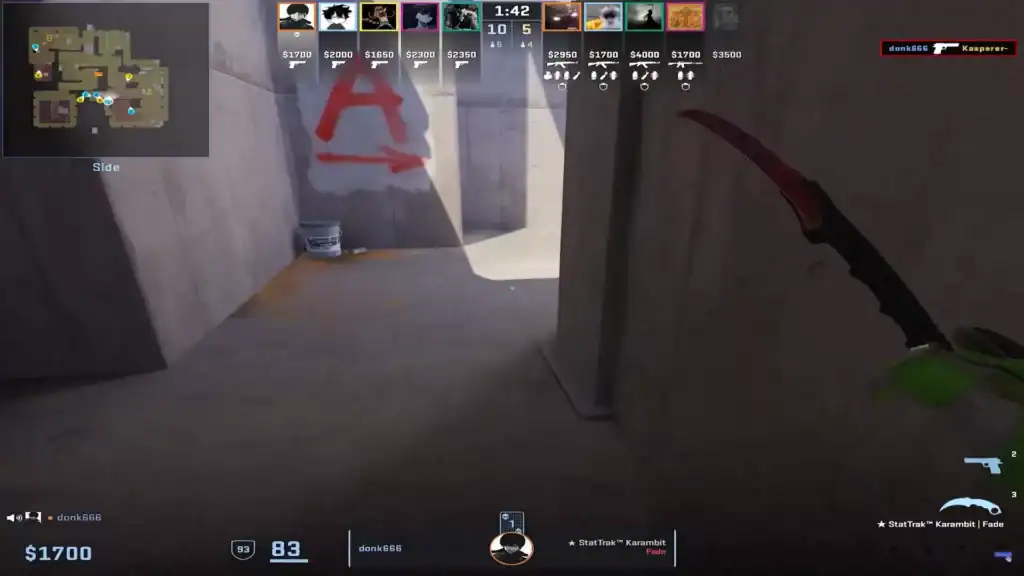
A Site on Vertigo is a strategic hotspot with multiple entry points and defensive positions. Mastering these callouts can significantly boost your team’s coordination and effectiveness.
| Callout | Description |
|---|---|
| A Ramp | A large open slope leading to A Site, often used by terrorists (Ts) for quick pushes. |
| Sandbags | A corner on A Ramp where counter-terrorists (CTs) can ambush Ts. |
| Double/Boost | The set of red crates near A Site, useful for controlling the area and providing cover. |
| Scaffold/Yellow | A platform that connects the way from Dog to a position under the Ramp. The whole platform is covered with a large yellow tarp. |
| Lane | A way that connects Scaffold and A Default, allowing hidden exits to plant A. |
| Default A | A spot behind three red boxes on the A plant. |
| Backside | A room between CT and plant A. |
| Haven | A platform on the Backside, ideal for snipers to hold enemies on plant A. |
Also Check: Mirage Callouts CS2
B Site Callouts
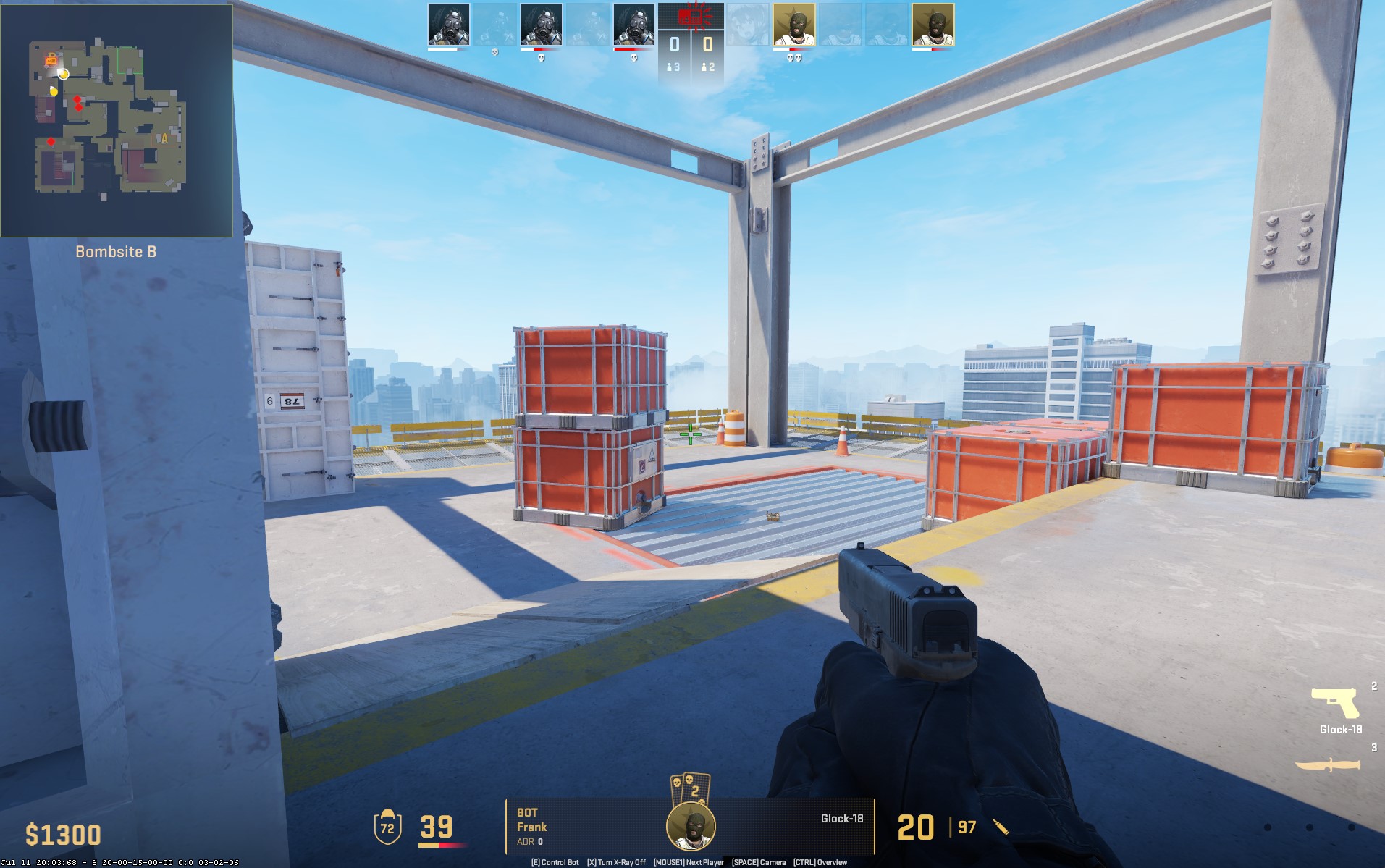
B Site is another critical area with its unique set of callouts. It requires strategic positioning and quick reflexes to hold or take control effectively.
| Callout | Description |
|---|---|
| B Stairs | Connects T Spawn to B Site, a common entry point for Ts. |
| Catwalk | A platform extending from B Site, offering strategic positioning but vulnerable from below. |
| Default B | A spot behind two red boxes, ideal for holding CT pushes and planting the bomb. |
| Ninja | A position between two boxes, which allows players to hold B stairs and catwalk. |
| Understairs | A position under B stairs, allowing players to hold B stairs and under Mid. |
| Cold | Located on the B plant, it allows players to hide and hold CT spawn while making a dangerous jump. |
| Elec | An electro box that helps players to hold CT or B plant. |
Mid Callouts
Mid is the central battleground of Vertigo, often dictating the flow of the game. Control over Mid can give your team a significant advantage in rotations and map control.
| Callout | Description |
|---|---|
| Top Mid | Closest to CT Spawn, controlling this area is crucial for map dominance. |
| Connector | Links Mid to B Site and CT Spawn, perfect for quick rotations and surprise attacks. |
| Elevator | Connects A Site with Top Mid and Door, a strategic choke point. |
| Boost Mid | A box that allows players to make a boost and hold T Mid from a nontrivial position. |
| Unfair | A box that allows players to hold T and CT Mid. |
| Iron | Metal rods along the exit after T Mid. |
Also Check: Ancient Callouts CS2
T Spawn Callouts
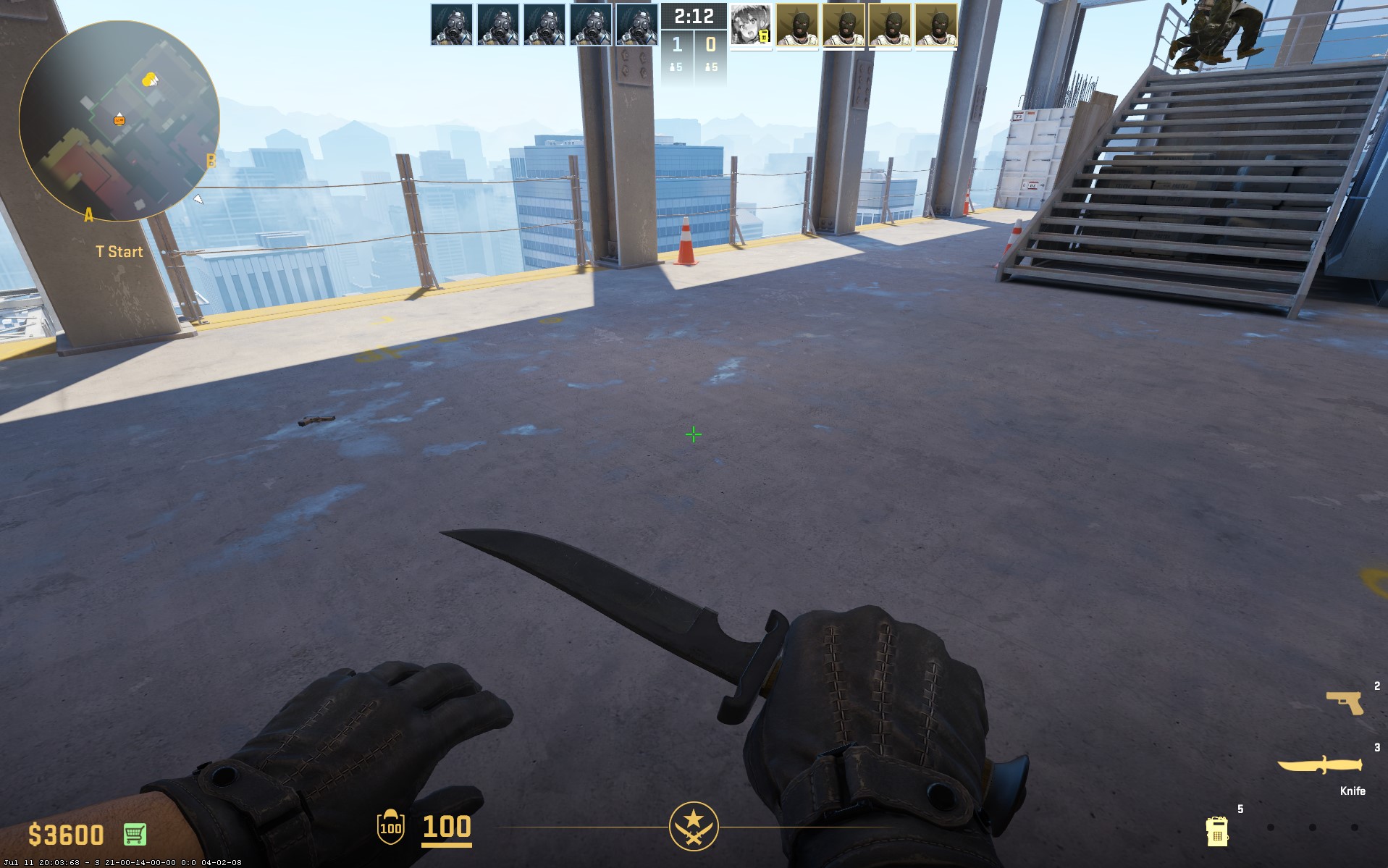
T Spawn is where the terrorists start each round. Knowing these callouts can help in planning early-round strategies and effective executions.
| Callout | Description |
|---|---|
| T Stairs | Provides access to T Mid, essential for early round strategies. |
| Toilets | An interactive element in T Spawn, useful for hiding players and weapons. |
| Generator | A spot on the upper T Spawn, useful for holding Mid. |
| 50 | A room between T Spawn and the room under elevators, named after the number 50 on its wall. |
CT Spawn Callouts
CT Spawn is the starting point for counter-terrorists. Effective use of these callouts can help in coordinating defenses and retakes.
| Callout | Description |
|---|---|
| Heaven | Overlooks A Site, giving CTs a defensive advantage. |
| Electric Box | Located between CT Spawn and B Site, offering cover during retakes. |
| CT Spawn | The area where CTs start playing rounds. Control here can change the game. |
Also Check: Overpass Callouts CS2
Additional Key Vertigo Callouts
Knowing these additional CS2 map callouts for Vertigo can further enhance your gameplay, providing you with more tactical options and better map awareness.
| Callout | Description |
|---|---|
| T Mid | The part of Mid closest to T Spawn, a hotspot for early engagements. |
| Mid | The central part of the map, a major battleground. |
| Under Mid | A large corridor between B stairs and connector, mirroring Mid on the ground floor. |
| Bridge | Connects the room under elevators and Ramp. Great for holding the connector. |
| Big Box | Located between Bridge and Ramp, this box is a prime position to hold enemies. |
| Dog | A spot above the Ramp, excellent for holding enemies from the bridge. |
| Ramp | A big metal platform connecting the room with Big Box and A plant. |
| Double/Boost | A position with two red boxes on A plant, useful for controlling A plant and Ramp. |
| Elevators | Connects A plant and Top Mid. |
Upper vs Lower Floors on Vertigo – All Callouts
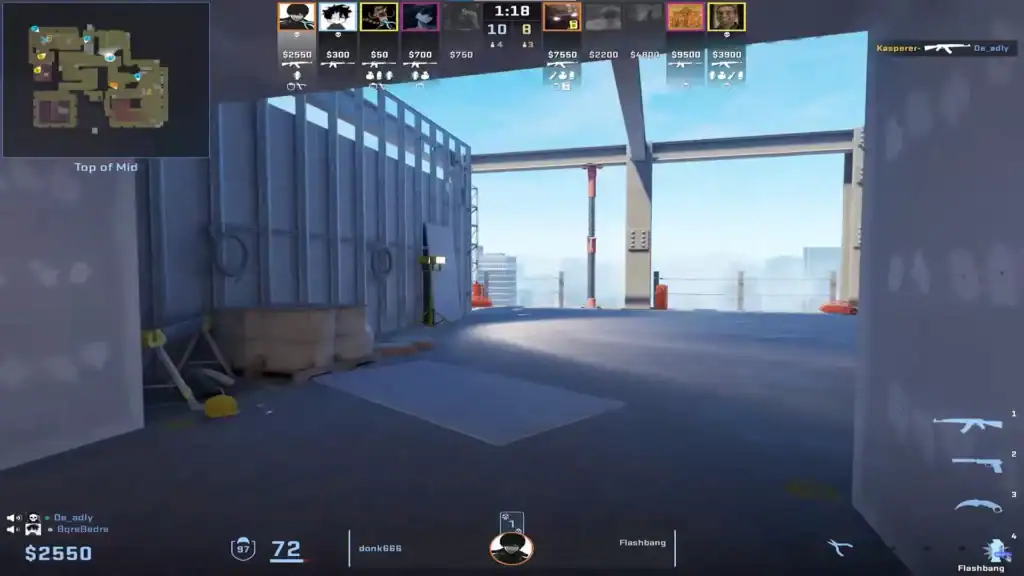
Vertigo is unique among CS2 maps because it features multiple vertical layers that heavily influence pacing, rotations, and site control.
The upper floors contain long sightlines and key choke points, while the lower floors offer tighter angles and aggressive pushing opportunities.
Understanding which callouts belong to each floor helps teams communicate quickly and avoid confusion during executes, retakes, and rotations.
Below is a full breakdown of every major Vertigo callout organized by floor level.
Upper-Floor Callouts
The main bombsite on the upper level where the attackers plant on the A side.
The long upward ramp attackers use to approach A Site.
The elevated CT position overlooking A Site from above.
The most common and safe plant spot on A Site.
The rear portion of A Site used by defenders to anchor or hide.
A corner near A Ramp with stacked sandbags used for surprise holds.
The small CT room connecting mid-rotations to upper A.
A boosting ledge on A Ramp that lets CTs hold higher angles.
The narrow walkway between Ramp and Site used for late-round pushes.
The counter-terrorist starting area leading to mid and A rotations.
The upper portion of Mid that offers visibility into construction routes.
The fenced-off corner near A Ramp used as a defensive hold.
A small upper-floor cutout offering vision toward A-side pathways.
The multi-level construction scaffolding used by Ts to approach A.
A thin path along the edge near A Ramp offering alternative angles.
Lower-Floor Callouts
The main bombsite located on Vertigo’s lower level.
The main staircase route Ts use to approach B Site.
The standard plant spot on the B bombsite.
The back portion of B Site where defenders often anchor.
Metal rafters above B offering elevated defensive angles.
The lower area beneath A Ramp used for flanks or aggressive pushes.
The central area connecting A, B, and construction routes.
The terrorist-controlled entrance into Mid from spawn.
A staircase near T spawn leading toward Mid and B.
The early-round holding area where Ts gather before committing to a site.
A small vertical connector leading between lower routes.
The under-development area linking Mid to B Site.
A recessed position near B used to hide or anchor defensive plays.
Lower tunnels underneath construction offering flank routes.
Tips: How to Use Callouts Effectively on Vertigo
Mastering Vertigo’s callouts is essential for navigating its vertical layout and fast rotations. Because the map features both upper and lower floors, always specify elevation when giving information, such as Upper A Ramp or Lower Mid.
Keep callouts short, clear, and consistent so teammates can react instantly during pushes, retakes, or lurks.
Coordinate utility by calling exact locations like Sandbags, B Rafters, or Scaffolding to ensure smokes and flashes land properly.
When rotating, announce your path to avoid stacking the wrong site. Precise communication on Vertigo often decides rounds, making callout discipline a major advantage.
Summary
These CS2 Vertigo callouts not only help in communicating effectively with your team but also in strategizing and executing plays. Keep practicing these callouts, and soon, you’ll find yourself dominating Vertigo like a pro.
FAQs
1. What are Vertigo callouts in CS2?
Vertigo callouts are location names used by players to communicate specific areas of the map quickly and clearly. These callouts help teams coordinate rotations, execute strategies, and identify enemy positions.
2. Why are callouts so important on Vertigo?
Vertigo is a multi-level map with tight corridors and vertical angles. Proper callout usage helps avoid confusion, speeds up reactions, and allows for more coordinated pushes and retakes.
3. Are Vertigo callouts different in CS2 compared to CS:GO?
Most classic callouts remain the same, but some updated map geometry and visibility changes in CS2 have slightly shifted how certain areas are referenced. Players still use common terms like A Ramp, B Stairs, and Mid.
4. How can beginners learn Vertigo callouts quickly?
Start by memorizing major areas such as A Site, A Ramp, B Site, B Stairs, Mid, and T Spawn. Watching pro matches, using workshop maps, or playing with friends who use callouts helps reinforce them.
5. What are the most essential callouts on Vertigo?
The most important callouts include A Ramp, A Site, A Heaven, B Site, B Stairs, T Lobby, Mid, Fence, and Boost Spot. Knowing these gives you all the basics needed for effective communication.