

Video games used to be something only a few people played. Now, they’re a huge part of life all over the world. In 2026, billions of people play games on phones, computers, and game consoles.
Kids, adults, and even grandparents are playing. It’s not just for fun anymore. It’s a big business and a big part of how people spend time together.
In this article, we’ll look at what’s going on in the gaming world. We’ll talk about how big the market is, what kinds of games people play, who’s playing, and how the business is changing.
From mobile games to older gamers to new ways companies make money, the numbers help tell the story of why gaming keeps growing.
Table of Contents
Market Growth and Forecasts

The industry keeps growing, though not in leaps and bounds anymore. Growth feels more grounded, now confident, sustained.
The U.S. and China remain the primary drivers of the revenue, but it’s the emerging markets India, the Middle East, and Africa that are worth watching.
Although their growth may be smaller in absolute terms, the energy is unmistakable. It’s not just about scale anymore. It’s about momentum.
| Region | 2025 Revenue | 2030 Forecast | CAGR |
|---|---|---|---|
| Global | $188.8B | $257B | 6.4% |
| United States | $57B | $77B | 6.1% |
| India | $4.6B | $9.1B | 14.6% |
| Middle East & Africa | $8.2B | $14.5B | 12.1% |
Platform and Technology Trends

Mobile is still where the money is, and that won’t change anytime soon. But it’s not the full story. PC and console still matter, especially for depth and engagement.
New hardware is arriving, big franchises are bouncing back, and players expect their games to work across everything.
Developers, in turn, are adjusting to a world where no single platform can be ignored and where markets are getting noisier by the month.
| Platform | Revenue Share | Growth Trend | Notes |
|---|---|---|---|
| Mobile | ~55% | ~6–7% annually | Largest segment globally, driven by free-to-play and emerging markets |
| Console | ~28% | ~5–6% annually | Growth supported by PS5 and Xbox Series generation and major AAA releases |
| PC | ~17% | ~3–4% annually | Stable market with strong esports, Steam ecosystem, and live-service games |
| VR / XR | <2% | ~8–10% annually | Small but growing segment driven by devices like Meta Quest and Apple Vision ecosystem |
Mobile now represents about 50% of global revenue and grows roughly 11% annually, prompting studios to prioritize smartphone releases.
After the pandemic slowdown, console revenue is expected to outpace PC growth starting in 2025, as new hardware and blockbuster titles revive engagement.
The PC–console core is highly lucrative, worth $80.2B in 2024 and projected at $92.7B by 2027, with console sales rising ~7% annually.
About 19% of U.S. gamers play across console, PC, and mobile, encouraging major franchises to launch simultaneously on multiple platforms.
PC and console players average ~2.1 hours per day, while mobile users spend ~1.6 hours per day, highlighting different engagement styles.
About 36% of developers are targeting XR, down from 42% in 2022, as adoption has been slower than expected.
Meta Quest leads with 40% of developers targeting it, while Apple Vision Pro attracts 30% interest, signaling high-end XR growth potential.
Player Demographics
| Metric | Stat |
|---|---|
| Total Global Players (2025) | ~3.6 billion |
| Projected by 2027 | ~3.8 billion |
| U.S. Weekly Players | ~191 million (about 60% of the population) |
| Average Gamer Age | 35–36 years |
| Players Aged 50+ | ~29% |
| Global Gender Split | ~52% male / 48% female |
| Gen Alpha Gaming Rate | ~90–94% |
| Gen Z Gaming Rate | ~85–90% |
| Boomers Gaming Rate | ~45–50% |
Gaming used to be a young person’s world. Not anymore. The average player is in their mid-30s, and a surprising number are well past 50.
Mobile has helped open the door, especially for women, and the result is a player base that’s more representative of the world around it. That shift is still unfolding; it’s already changing how games are made, marketed, and played.
Social and Community Impact

Games have always been fun. Increasingly, though, they’ve also become social glue.
Whether it’s siblings bonding over co-op, old friends staying connected through online matches, or entire communities forming around shared fandoms, gaming has found a unique way to bring people together.
The connections feel real because, in many cases, they are.
About 90% of players game online in 2025 (up from 18% in 1999), and nearly 75% play with others weekly, highlighting how multiplayer experiences shape modern gaming communities.
Around 84% of gaming parents play with their children, and roughly 55% do so weekly, making gaming a common modern family activity.
About 74% of adult gamers make friends through games, and roughly 40% have met a romantic partner in multiplayer or community settings.
Roughly 84% of Gen Z and Gen Alpha gamers say gaming communities feel inclusive, reinforcing gaming’s role as a social hub for younger generations.
Top reasons for gaming: relaxation (~70%) and fun (~69%). Boomers focus on mental stimulation (~90%), while over 70% of Gen Z prioritize social interaction.
About 78–80% of Americans see games as joyful and stimulating. 72% of Gen Z view gaming as relationship-building versus ~22% of Boomers, showing perceptions evolve as gaming-native generations age.
Player Engagement and Behavior
Players are still spending serious time in games. But that time is clustering few big titles are soaking up most of the attention.
The rest? They’re scrambling for what’s left. It’s become an attention economy where reach is uneven and breakout success is harder to come by.
Players logged roughly 6–7% more total playtime in 2024, with late-year activity hitting record levels even as new-player growth slowed post-pandemic.
About 10 major titles account for nearly half of all global gameplay hours, showing how blockbuster live-service games dominate player time.
Players are concentrating on fewer core games. On Steam, roughly 35% play only 1–3 titles, with similar patterns on PlayStation (32%) and Xbox (33%).
Older games remain hugely popular: on PC, about 67% of playtime goes to titles 6+ years old, while consoles see roughly 45–50% of playtime on older games.
Content and Genre Trends

More inclusive characters, nostalgic callbacks, and deeply immersive worlds are setting the tone. And preferences often shift depending on the platform, making it harder for any one formula to dominate.
Shooter titles generated roughly $7.5B in PC revenue and about 16–18% of console sales, fueled by competitive hits like Counter-Strike, Call of Duty, and Apex Legends.
Fortnite accounts for roughly 9–10% of global gameplay time, and its nostalgic “OG” season pushed its battle-royale player share to nearly 75–77%.
Adventure-game revenue rose on PC by roughly 20–22%, while console adventure sales fell about 12–14%, highlighting platform-specific preferences.
After plateauing, the battle-royale genre is growing again across PC, console, and mobile thanks to new modes, seasonal content, and cross-platform play.
Fortnite’s throwback season nearly tripled player activity, while Destiny 2 and Overwatch saw only modest single-digit engagement boosts from nostalgia updates.
Honor of Kings generated about $1.9B, and alongside Monopoly GO! and Royal Match, the top three mobile games earned nearly $5B combined.
Long-running mobile hits like Candy Crush Saga continue to thrive, generating roughly $1.1B in 2024, showing well-maintained casual games last over a decade.
In early 2025, 7 of the top 10 Android downloads were puzzle or simulation titles, and an offline bundle reached roughly 9.6M installs in a single month.
Surveys show 66% of core gamers want expansive open worlds, 42% enjoy survival gameplay, and 38% value cutting-edge graphics, pushing developers to invest in sprawling sandbox games.
Around 68% of narrative-focused players expect diverse characters and perspectives, driving broader representation in modern game narratives.
Monetization and Business Models
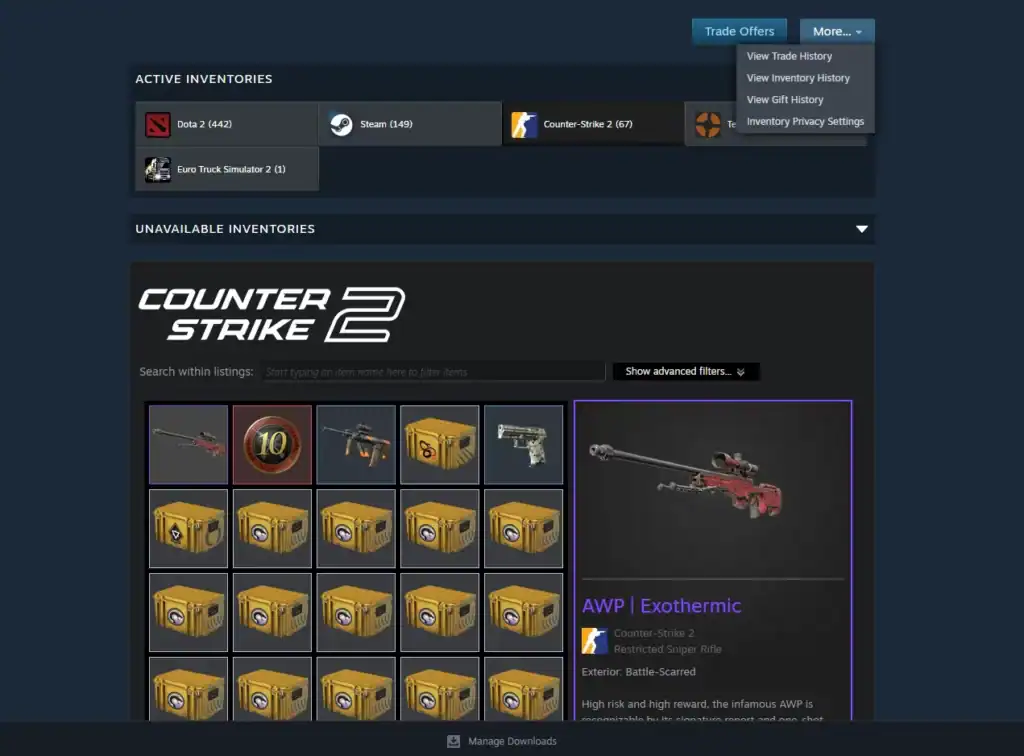
There’s no one-size-fits-all approach to making money in games anymore. Consoles still generate more revenue per player, but mobile reaches far more people. And in between, hybrid models part free-to-play, part subscription, part merch or media are starting to feel like the norm.
Microtransactions, for better or worse, aren’t going anywhere. Neither are tie-ins with movies, shows, and influencers.
Consoles monetize best at about $82K per million players, roughly 2.5× mobile revenue per head, driven by $70 games, DLCs, and subscription services.
PC relies heavily on microtransactions (58% of revenue, ~$24.5B), while console subscription spending jumped 14% YoY to $6.9B through Game Pass, PS Plus, etc.
Mobile is dominated by free-to-play (71% of players), though 26% of console users still prefer pay-up-front titles; only 7% of mobile players do.
Spending depth varies: 51% of console and 28% of mobile users spend ≥ $5 per month on games.
Virtual currencies and cosmetic add-ons are the most popular purchases, embedding micro-spending into daily gameplay.
Hybrid revenue models are growing, yet 51% of developers still rely on full-price sales as their primary revenue source.
25% of AAA studios have game-to-film/TV projects, compared with ~10% industry-wide, leveraging big franchise power.
Steam visibility multipliers fell from 38× (2019) to 7× (2024) amid 18,900 releases, reducing early-launch revenue spikes.
Industry and Workforce Trends

Layoffs, workplace concerns, questions around AI, it’s all in flux. But you also see small studios punching above their weight, remote teams doing remarkable work, and a generation of talent asking tougher questions about what this industry should become.
57% of developers work at studios with fewer than 50 employees, and 32% are in indie teams, driving innovation but creating volatility.
74% of studios offer optional or hybrid offices, cementing distributed workflows in game development.
35% experienced recent cuts (especially QA at 22%), and 56% fear additional layoffs despite record revenue growth.
Only 5% view acquisitions positively, while 85% see them negatively or mixed, reflecting consolidation concerns.
57% support unionization (72% among 18–24-year-olds), though only 5% are actual members to date.
66% of studios prioritize PC; Unity and Unreal power ~33% each, while 28% consider switching, mostly toward Godot.
Mobile interest declines to 24% (Android), VR/AR drops to 36%, while anticipation rises for potential new Switch opportunities.
49% of studios use AI (mainly in biz/marketing), yet 84% express ethical concerns and 32% have no formal policy yet.
FAQs
What is the total number of global gamers in 2025?
In 2025, there are approximately 3.55 billion people playing video games worldwide, showing a steady growth from previous years.
Which region generates the most gaming revenue in 2025?
The Asia-Pacific region continues to lead, contributing nearly 48% of global gaming revenue, with China remaining the largest single market.
How much revenue does the mobile gaming segment generate in 2025?
Mobile gaming is the largest platform, generating around $103 billion in 2025, accounting for roughly 51% of total gaming revenue and maintaining double-digit annual growth.
What are the trends in player demographics for 2025?
The average gamer is 36 years old, with nearly 30% aged 50+, and the gender split is approaching parity, with women representing about 46% of the player base. Gen Z and Alpha remain highly engaged, with gaming rates over 85%.
How is the game development workforce evolving in 2025?
Developers remain largely young, with 56% having under ten years’ experience. Remote and hybrid work models are now standard, and generative AI adoption grows, though ethical and policy concerns remain prominent.
- newzoo.com
- ipsos.com
- mordorintelligence.com
- gdconf.com
- theesa.com
- americangaming.org
- skyquestt.com
- statista.com