
Demolishing walls in Rust is a core part of raiding, base redesign, and correcting building mistakes. Each wall tier behaves differently, requiring specific tools, explosives, and strategies.
Below is a complete breakdown of how to destroy wood, stone, metal, and armored walls efficiently.
Table of Contents
Demolishing Wood Walls in Rust
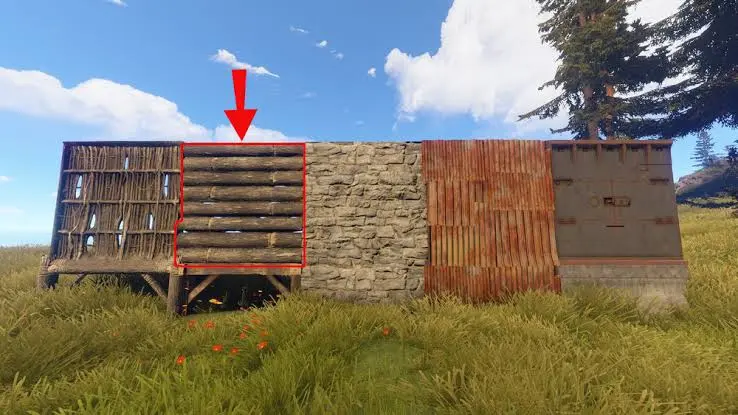
Wooden walls are the weakest building tier in Rust and are relatively easy to destroy, even early in a wipe. If you’re dealing with a wood wall frame, you can often remove it quickly before it upgrades or decays.
Best Methods
Hatchets and salvaged tools destroy wood efficiently, especially early wipe.
Fire arrows and flamethrowers melt wooden walls rapidly.
Satchels and beancans destroy wood instantly, though often unnecessary.
Tips
Wood walls take extra damage from fire-based weapons.
Unmaintained wood walls decay quickly—sometimes time is all you need.
Wood walls are best avoided for long-term base security, but they’re easy targets during early-game raids.
Demolishing Stone Walls in Rust
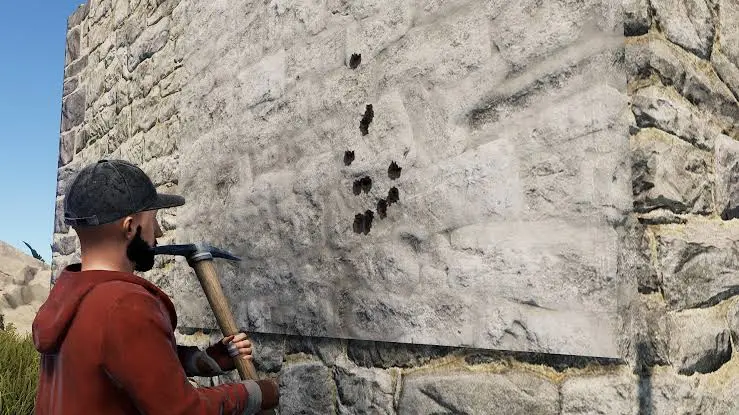
Stone walls are the most common defensive choice in Rust, offering solid protection at a reasonable upkeep cost. However, they are still vulnerable if attacked correctly.
Best Methods
Satchels, C4, and rockets destroy stone walls reliably.
Jackhammers and pickaxes work when attacking the soft side.
Fire damage is ineffective against stone structures.
Tips
The soft side saves massive amounts of sulfur if exploited.
Use rockets where splash damage can hit multiple structures.
Stone walls balance durability and cost, but poor orientation can make them a liability.
Demolishing Metal Walls in Rust
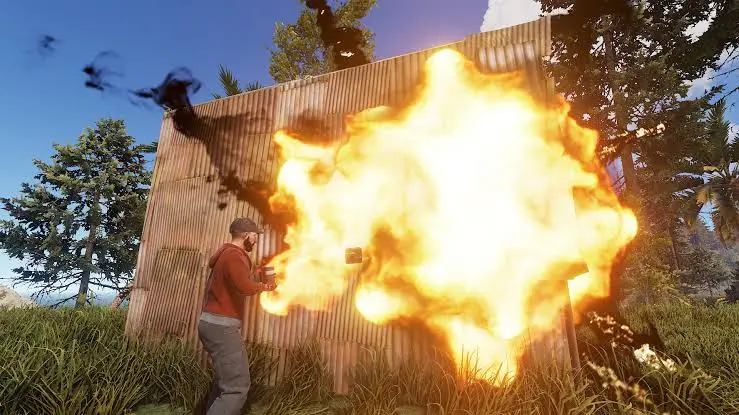
Sheet metal walls are significantly tougher than stone and resist most low-tier raiding methods. At this stage, raids become expensive and noisy.
Best Methods
The only efficient way to destroy sheet metal walls.
Possible but inefficient and unreliable for metal walls.
Tools are ineffective, even on the soft side.
Tips
Metal raids are loud and often attract counter-raiders.
Plan rocket angles to damage multiple walls or doors.
Metal walls are a strong mid-to-late-game defense and usually force attackers to commit significant resources.
Demolishing Armored Walls in Rust
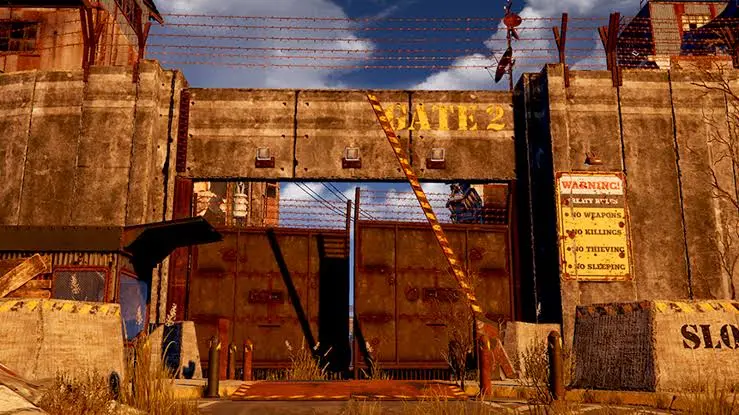
Armored walls are the strongest buildable walls in Rust and are used only in high-value bases. Destroying them is costly and rarely worth it unless you’re targeting top-tier loot.
Best Methods
C4 and rockets are mandatory for armored walls.
Rockets are best when multiple armored pieces can be hit.
Tips
Usually protect TC rooms or top-tier loot.
Look for doors or weaker paths before committing to armored walls.
If you’re raiding armored walls, you’re committing to a high-risk, high-cost operation.
Summary
Knowing how to demolish walls in Rust isn’t just about raw firepower. It’s about efficiency, wall orientation, and choosing the right raid path.
Wooden walls fall to basic tools and fire, stone walls reward soft-side awareness, metal walls demand explosives, and armored walls test even the richest raiders.
Before committing resources, always scout the base, identify weak points, and calculate whether the loot is worth the cost. Smart raiding wins far more often than brute force.
FAQs
1. What is the cheapest way to destroy a wall in Rust?
The cheapest method depends on the wall type. Wooden walls can be destroyed with tools or fire, while stone, metal, and armored walls require explosives for efficiency.
2. Does wall orientation matter when raiding in Rust?
Yes. Many walls have a soft side that takes significantly more damage from tools. Attacking the soft side can save a large amount of sulfur and time.
3. Can you destroy metal or armored walls without explosives?
No. Sheet metal and armored walls are designed to resist tools and fire. Explosives like rockets or C4 are the only practical way to destroy them.
4. Are rockets or C4 better for wall demolition?
Rockets are often more cost-efficient when you can use splash damage on multiple structures, while C4 is precise and ideal for single targets.
5. How long does it take for walls to decay in Rust?
Decay time depends on the wall material and whether the building has upkeep. Wooden structures decay quickly, while stone, metal, and armored walls decay much more slowly.