

Counter-Strike 2 is a game where precision, reaction speed, and consistent movement often determine the outcome of a round. Because of this, choosing the right keyboard for CS2 can make a noticeable difference in gameplay.
Many competitive players focus heavily on their mouse, but the keyboard is just as important for movement techniques like counter-strafing, bunny hopping, and executing utility lineups such as a smoke window Mirage CS2 throw.
Modern gaming keyboards designed for competitive shooters focus on fast actuation, minimal input delay, and compact layouts that leave more room for mouse movement.
Features like adjustable actuation points and Rapid Trigger technology allow players to control movement with greater precision.
Below are five of the best keyboards for CS2 based on performance, popularity among players, and reliability.
Table of Contents
Best CS2 Keyboards
| Keyboard | Layout | Switch Type | Adjustable Actuation | Rapid Trigger | Approximate Price |
|---|---|---|---|---|---|
| Wooting 60HE | 60% | Hall-effect analog | Yes | Yes | $180–$240 |
| SteelSeries Apex Pro TKL | TKL | OmniPoint adjustable | Yes | Limited | $170–$220 |
| Razer Huntsman V3 Pro TKL | TKL | Analog optical | Yes | Yes | $220–$250 |
| Logitech G Pro X TKL | TKL | Mechanical | Limited | No | $200–$230 |
| Corsair K70 RGB Pro | Full size | Cherry MX mechanical | No | No | $150–$170 |
1. Wooting 60HE
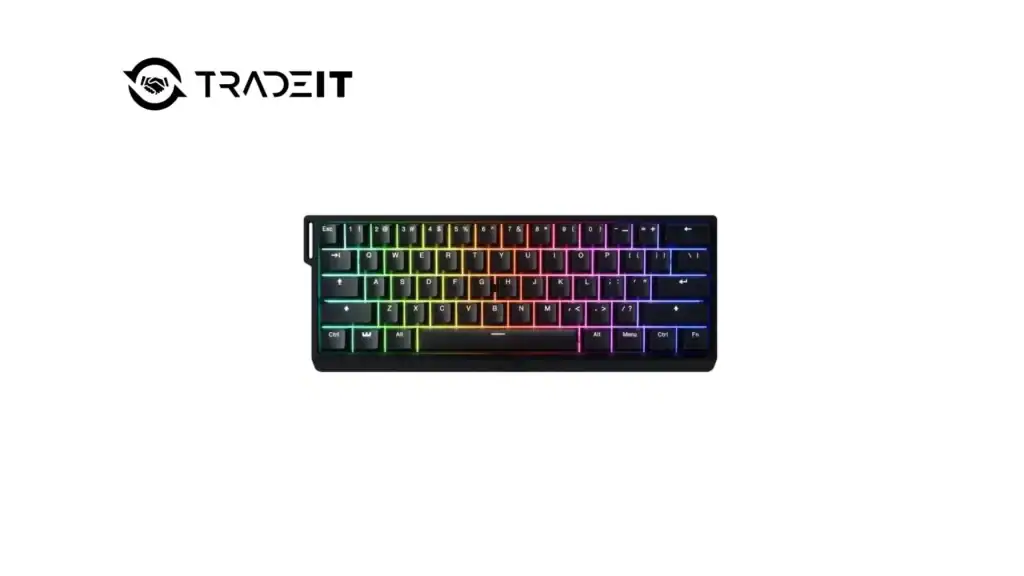
The Wooting 60HE is widely considered one of the most popular CS2 keyboards available today. It uses Hall-effect switches that detect magnetic changes rather than traditional mechanical contact, allowing extremely precise control over actuation points.
One of the keyboard’s most important features is Rapid Trigger. This technology resets the key instantly as soon as you release it, which helps with fast counter-strafing and quick directional changes during gunfights.
Because the keyboard uses a compact 60 percent layout, it removes the function row and numpad. This gives players more space for mouse movement, which is especially useful for low sensitivity players who need large arm movements when aiming.
Features:
Use magnetic sensors instead of physical contacts, providing highly precise key detection and smoother, more consistent input performance.
Allow users to customize how far a key must be pressed before it activates, helping fine-tune responsiveness for different games.
Enables faster key reset after release, allowing rapid repeated inputs that are especially useful in competitive games.
A minimal keyboard design without the numpad and extra keys, giving players more desk space for large mouse movements.
Delivers near-instant key registration, reducing the delay between pressing a key and seeing the action in-game.
Built to handle tens of millions of keystrokes, ensuring long-term durability even with heavy daily gaming use.
Approximate price: $180–$240.
2. SteelSeries Apex Pro TKL
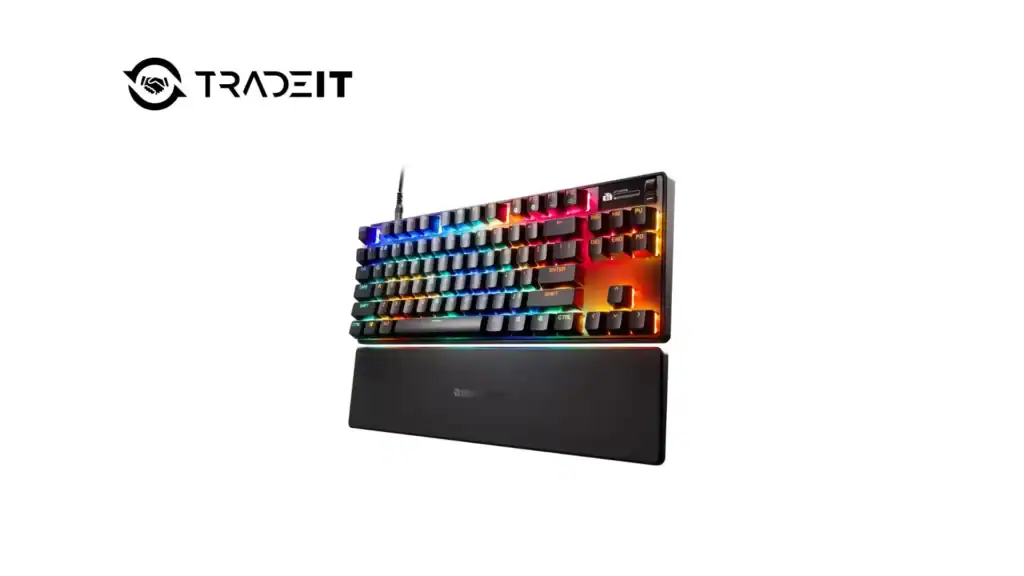
The SteelSeries Apex Pro TKL is another keyboard commonly used by competitive FPS players. Its main feature is OmniPoint adjustable switches that allow players to control how far a key must travel before it activates.
This means movement keys such as W, A, S, and D can be configured with extremely light actuation for faster responses while playing CS2. The keyboard also uses a tenkeyless layout, which removes the numpad while keeping function keys and navigation buttons.
The build quality is very solid thanks to its aluminum frame, and the keyboard offers strong software customization for actuation settings and macros.
Features:
Advanced switches that allow dynamic actuation adjustment, giving players precise control over how their keys respond.
Lets users adjust actuation points individually for each key, enabling highly personalized keyboard responsiveness.
A compact keyboard design without the numpad, providing more space for mouse movement during competitive gameplay.
Built with a sturdy aluminum chassis that improves durability and provides a premium, stable typing experience.
Offers per-key RGB effects and lighting profiles, allowing users to personalize the keyboard’s appearance.
Comprehensive software enables deep customization of macros, actuation settings, and lighting profiles.
Approximate price: $170–$220.
3. Razer Huntsman V3 Pro TKL
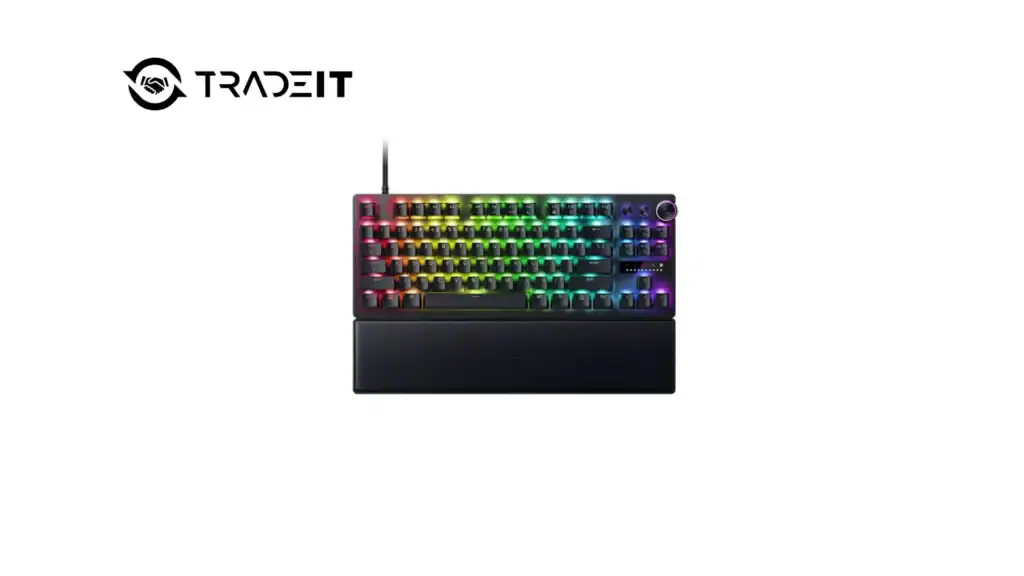
The Razer Huntsman V3 Pro TKL is designed specifically for esports players. It uses analog optical switches that allow adjustable actuation and extremely fast response times.
The keyboard also supports Rapid Trigger functionality, which makes movement inputs reset almost instantly when you release a key. This can help players perform faster strafes and more precise movement adjustments during fights.
Its tenkeyless layout gives players more mouse space, while the optical switch design ensures consistent input with minimal delay.
Features:
Use light-based actuation detection, delivering extremely fast response times and highly accurate key inputs.
Allows users to set how deep a key press must be before activation, enabling tailored responsiveness for different games.
Enables instant key reset after release, allowing rapid repeated inputs ideal for competitive gameplay.
A compact TKL design that removes the numpad, giving competitive players more space for precise mouse movements.
A strong aluminum construction that improves durability while providing a stable and premium keyboard feel.
Powerful software allows detailed control over actuation settings, macros, and lighting profiles.
Approximate price: $220–$250.
4. Logitech G Pro X TKL
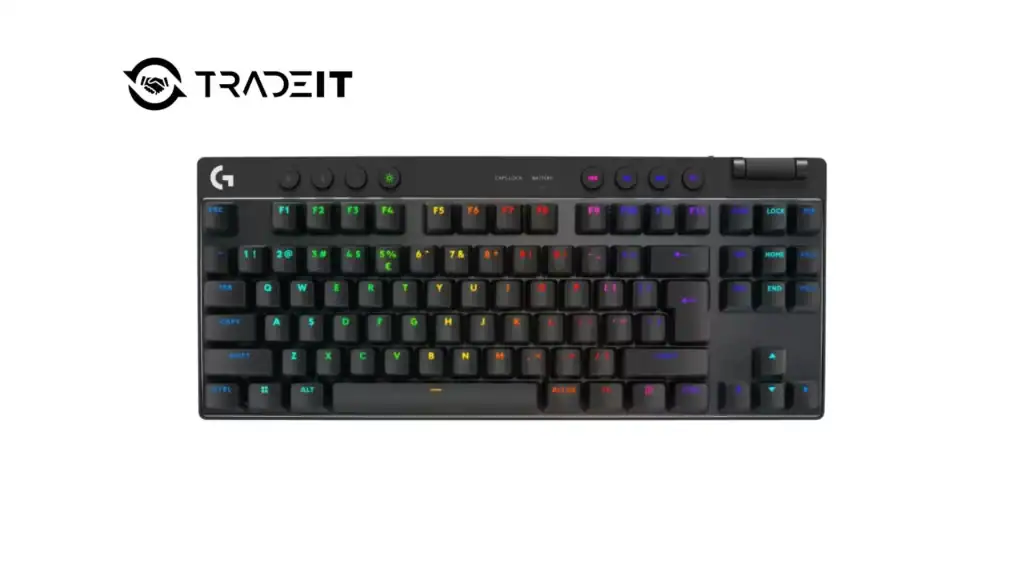
The Logitech G Pro X TKL is a keyboard built with professional esports competition in mind. Many professional players prefer Logitech gear because of its reliability and simple design.
One notable feature of this keyboard is the ability to swap switches, allowing users to customize the feel of their keys depending on preference. The keyboard also offers extremely low wireless latency through Logitech’s Lightspeed wireless technology.
Although it does not include advanced features like analog switches or Rapid Trigger, it remains a reliable choice for competitive players.
Features:
Allow users to replace or upgrade switches without soldering, making customization and maintenance much easier.
Logitech’s low-latency wireless connection designed for esports-level responsiveness and stable performance.
A compact keyboard design without the numpad, giving competitive players more desk space for mouse movement.
Built with durability and competitive gaming in mind, offering a sturdy construction suitable for intense daily play.
Supports personalized RGB lighting effects that can be configured through dedicated software.
Designed for extended wireless gaming sessions, reducing the need for frequent recharging.
Approximate price: $200–$230.
5. Corsair K70 RGB Pro
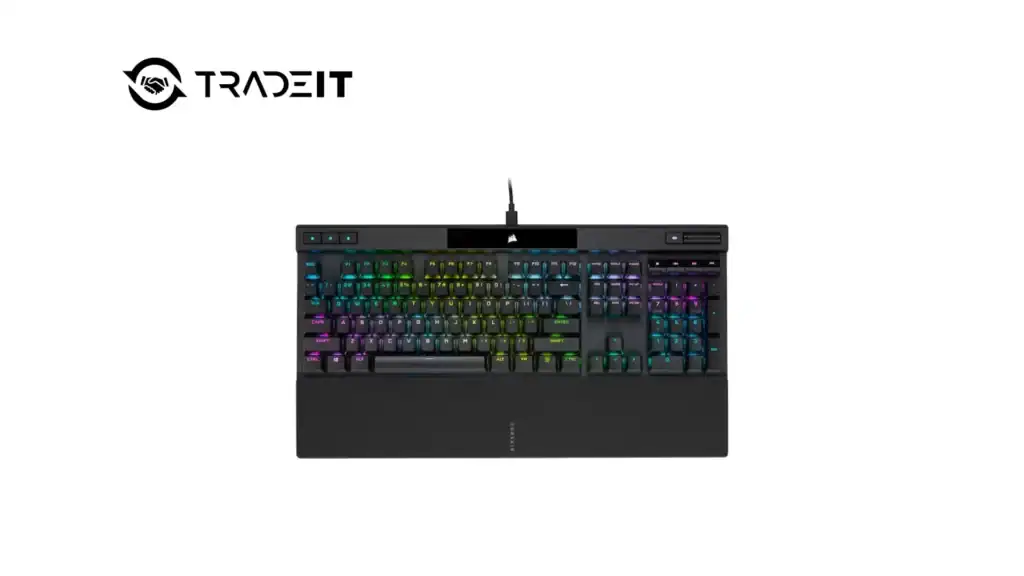
The Corsair K70 RGB Pro is a full-size keyboard designed for players who prefer having all keys available, including a numpad. While many competitive players use compact layouts, some gamers still prefer full-size keyboards for versatility.
The keyboard uses Cherry MX mechanical switches, which are known for their durability and consistent performance. Its aluminum frame gives it a sturdy build quality, and the keyboard is designed to handle long gaming sessions without issues.
Although it does not offer adjustable actuation like some newer keyboards, it still performs very well for CS2 thanks to its fast response time and reliable mechanical switches.
Features:
Uses trusted Cherry MX switches, known for their consistent feel, reliability, and long-lasting performance in gaming and typing.
Includes all standard keys plus a numpad, making it ideal for users who need both gaming functionality and productivity features.
Built with a sturdy aluminum chassis that enhances durability and provides a premium, stable typing experience.
Offers a fast polling rate for reduced input delay, ensuring quick and accurate response during gameplay.
Provides physical media buttons or wheels for easy volume and playback control without leaving your game or application.
Supports customizable RGB effects and profiles to personalize the keyboard’s appearance and match your setup.
Approximate price: $150–$170.
How to Choose a Keyboard for CS2
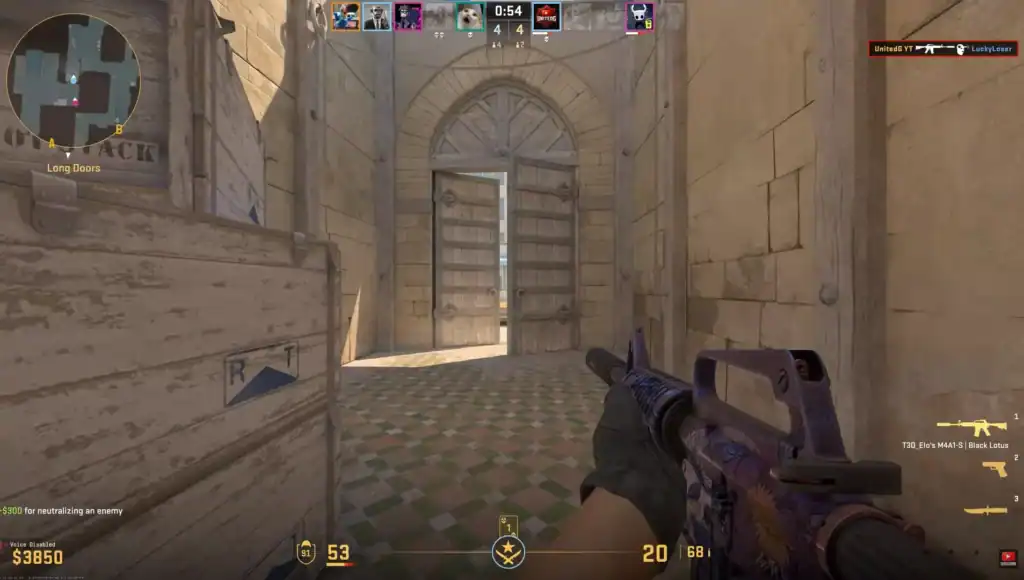
When selecting a keyboard for CS2, several factors should be considered. Competitive players typically prioritize responsiveness, compact layouts, and switch technology that supports precise movement.
Key factors to consider:
Modern Hall-effect and optical switches deliver faster response times than traditional mechanical switches, improving input speed and precision.
Adjustable actuation points allow movement keys to trigger faster, helping optimize responsiveness for competitive gameplay.
Compact layouts like 60% and tenkeyless free up desk space, giving players more room for precise and wide mouse movement.
Enables faster key reset and re-activation, improving counter-strafing and repeated movement inputs in fast-paced games.
A durable keyboard chassis ensures consistent performance over time, even under heavy competitive use.
Advanced software allows fine-tuning of actuation, lighting, and key behavior for a fully personalized setup.
Mechanical vs. Membrane Keyboards
When it comes to gaming keyboards, the age-old debate of mechanical versus membrane keyboards is still very much alive.
Mechanical keyboards provide a highly responsive typing experience due to their physical switch mechanism. This feature makes them an ideal choice for CS2 players who need a keyboard that delivers consistent, accurate, and satisfying tactile feedback.
Yet, membrane keyboards have their advantages being lighter, more flexible, and usually less expensive.
However, they generally lack the responsiveness and precision of their mechanical counterparts, which could be a disadvantage in a competitive gaming environment like CS2.
If budget is a concern, membrane keyboards might be a viable choice. But if performance is paramount, a mechanical keyboard is the way to go.
Key Switch Types
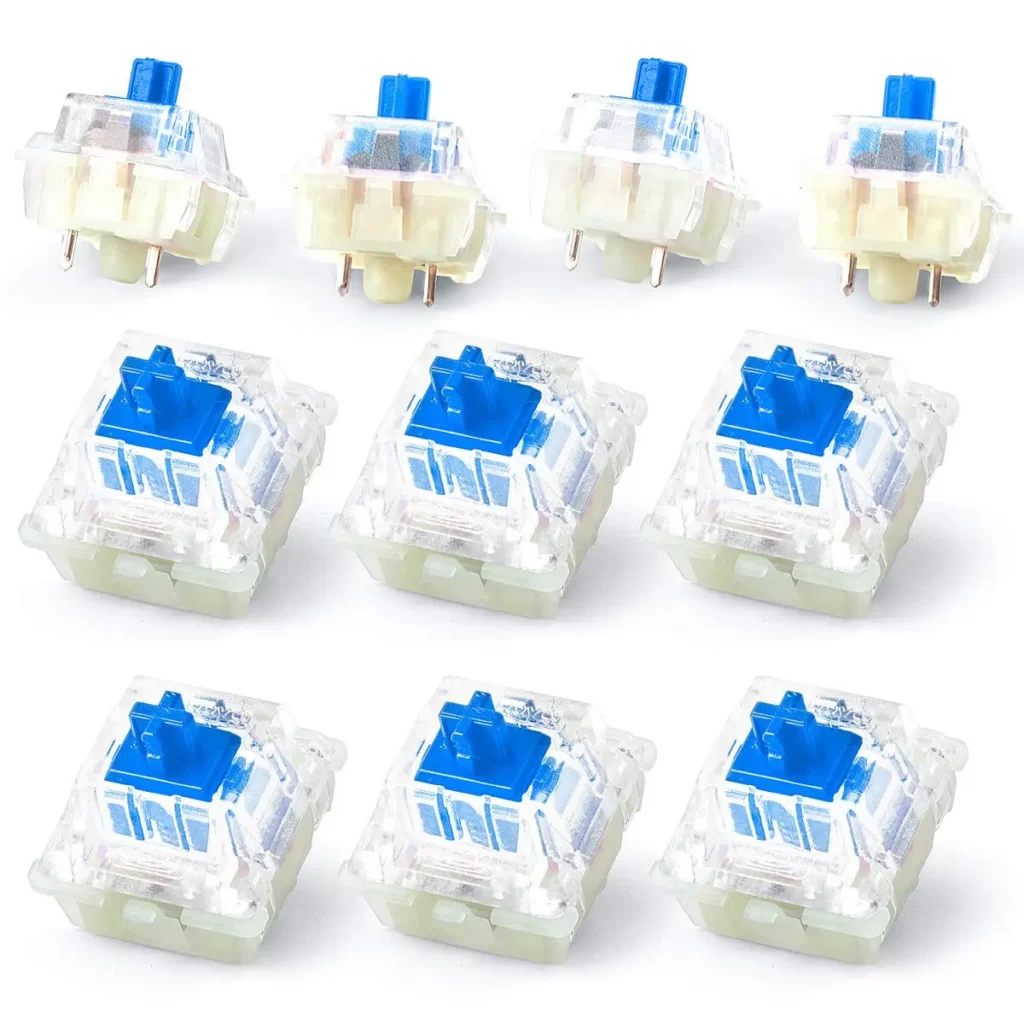
While all mechanical keyboards offer superior responsiveness, not all key switches are created equal. The type of switches used in a keyboard can significantly impact your gaming experience. Here are the different types of switches and their characteristics:
Provide a smooth and consistent keystroke with minimal resistance and quiet operation, ideal for fast, uninterrupted inputs.
Feature a noticeable bump during keypress, giving physical feedback that helps improve typing accuracy and control.
Combine a tactile bump with an audible click sound, delivering strong feedback with every key press.
In the gaming world, especially for fast-paced games like CS2, Red, Brown, and Speed switches are favored for their light actuation force and responsiveness.
Particularly, Speed switches are desirable for their shallower actuation point that enables faster responses. These features make them an excellent choice for a Counter-Strike 2 keyboard.
Best Budget Keyboards for CS2
If you’re building a competitive CS2 setup on a budget, the goal is to have low latency, fast switch response, and a compact layout without overspending. Here are three strong entry-level keyboards that deliver solid performance for the price.
1. Redragon K617 Fizz
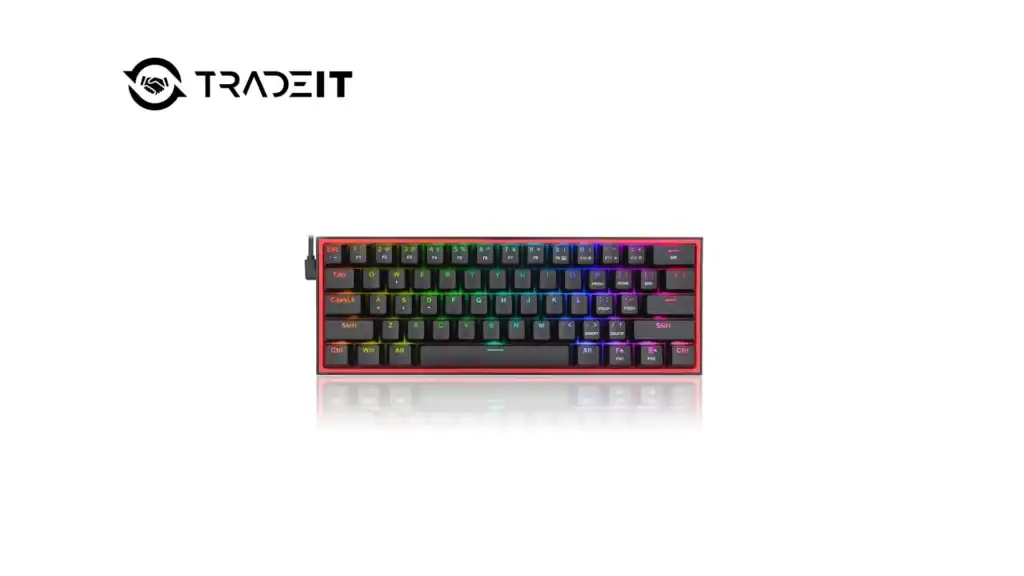
A minimal keyboard design that removes the numpad and function cluster, giving you more space for mouse movement and better FPS control.
Allow you to change switches without soldering, making customization and maintenance fast and simple.
Offers customizable lighting modes and effects to match your setup and personal style.
Provides a stable and low-latency connection, ensuring consistent performance in competitive gameplay.
Built to be portable and fast, making it ideal for competitive players and tournament setups.
Price: around $30–$40
The K617 Fizz is one of the best ultra-budget options for CS2 players. It focuses on speed and simplicity, offering a compact layout that frees up mouse space for aiming.
2. Royal Kludge RK61
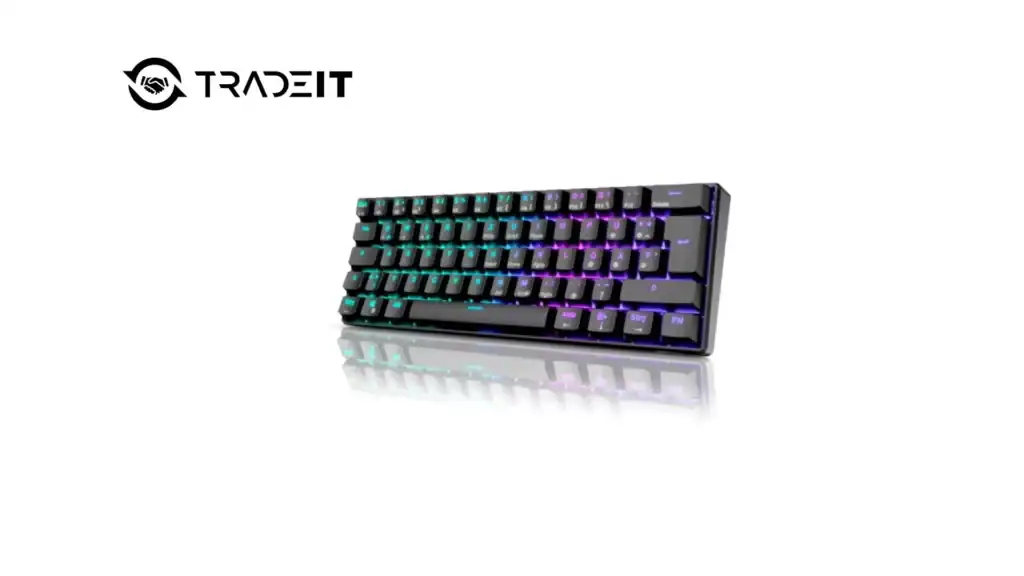
A compact keyboard design that removes the numpad and function row, maximizing desk space for mouse movement.
Supports both wireless and USB wired connection, giving flexibility for gaming, travel, or desktop setups.
Allows wireless pairing with multiple devices, making it easy to switch between PC, laptop, or mobile setups.
Features customizable lighting effects to enhance aesthetics and match your gaming setup.
Lightweight and compact build makes it easy to carry for travel, tournaments, or small desk setups.
Price: around $45–$60
The RK61 is a versatile budget keyboard that balances gaming performance with portability. It’s a good choice if you want both desk use and wireless flexibility.
3. Logitech G413 SE
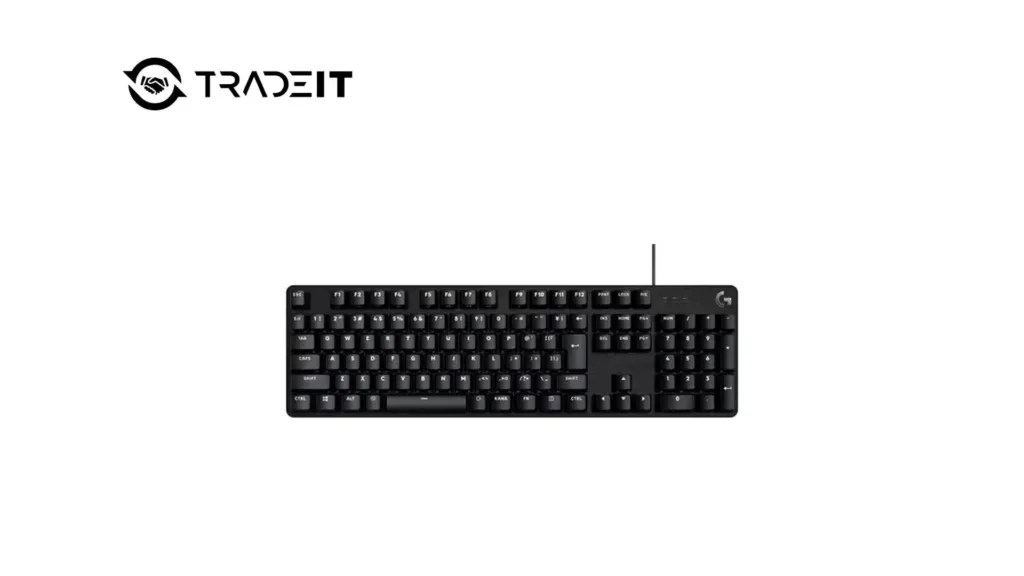
Available in either full-size or tenkeyless versions, allowing users to choose between productivity or more mouse space for gaming.
Features a solid aluminum build that improves durability and provides a stable, premium typing feel.
Provides a noticeable bump on keypress, improving feedback and typing accuracy during gameplay or daily use.
Ensures consistent, low-latency input without interference or wireless delay, ideal for competitive gaming.
A clean, distraction-free design focused on performance, stability, and competitive usability.
Price: around $65–$100
The G413 SE is the most premium-feeling option in this list, prioritizing stability and build quality over compactness or wireless features.
Summary
The best keyboards for CS2 combine fast actuation, reliable switches, and layouts that support competitive play.
The Wooting 60HE is currently one of the most popular options thanks to its Rapid Trigger technology and analog switches.
The SteelSeries Apex Pro TKL and Razer Huntsman V3 Pro TKL also offer strong customization features and extremely fast inputs for competitive players.
Meanwhile, the Logitech G Pro X TKL provides reliable tournament-ready performance, and the Corsair K70 RGB Pro is a solid choice for players who prefer a full-size keyboard.
Ultimately, the best keyboard for CS2 depends on personal preference, but choosing a high-quality keyboard designed for competitive gaming can improve responsiveness and movement control during matches.
FAQs
1. What is the difference between linear, tactile, and clicky switches?
Linear switches are smooth and quiet, tactile switches provide a noticeable bump for feedback, and clicky switches add an audible click along with tactile feedback.
2. Which switch type is best for gaming?
Most competitive gamers prefer linear switches because they allow fast, uninterrupted key presses with minimal resistance.
3. Are clicky switches too loud for shared spaces?
Yes, clicky switches can be relatively loud, which may be distracting in shared rooms, offices, or streaming environments without noise isolation.
4. Do tactile switches improve typing accuracy?
Yes, the tactile bump helps users feel each key activation, which can reduce typing errors and improve overall precision.
5. Can I switch between different switch types on the same keyboard?
Only keyboards with hot-swappable sockets allow you to change switch types without soldering; otherwise, the switch type is fixed at manufacture.